SANAA, Yemen (AP) — A suicide bomber blew himself up at a military parade rehearsal Monday in Yemen's capital, killing at least 60 soldiers in one of the deadliest attacks in the city in years, according to the ministry of defense, officials and witnesses.
A policeman collects evidence at the site of a suicide bomb attack at a parade square in Sanaa, Yemen, Monday, May 21, 2012. Officials say Monday's bombing near Sanaa's presidential palace is one of the deadliest attacks in the city in months. (AP Photo/Hani Mohammed)
The bombing appeared to be a failed assassination attempt against the Minister of Defense, Maj. Gen. Mohammed Nasser Ahmed, who arrived at the city square for the parade just minutes before the blast ripped through the area.
Nobody claimed responsibility for the attack, but it came as the country's new political leadership has been stepping up the fight against al-Qaida militants holding large swaths of land in the nation's south.
While fighting al-Qaida militants, Yemen's new president, Abed Rabbo Mansour Hadi, has been embroiled in a power struggle with loyalists of ousted leader Ali Abdullah Saleh. He has sacked several of them along with family members from top positions in the armed forces, including the air force.
Military officials said the suicide bomber was a soldier taking part in the drill, lining up with fellow troops at a main square in the capital, not far from the presidential palace. He belonged to the Central Security, a paramilitary force led by Saleh's nephew Yahia, they said.
Witnesses at the scene repeated the same claim, but nobody produced any concrete evidence to support it.
The officials spoke on condition of anonymity because they were not authorized to speak to the media.
Monday's bombing left a scene of carnage, with scores of bleeding soldiers lying on the ground as ambulances rushed to the scene. Several severed heads were on the pavement amid large pools of blood and human remains.
"This is a real massacre," said Ahmed Sobhi, one of the soldiers who witnessed the explosion. "There are piles of torn body parts, limbs, and heads. This is unbelievable. I am still shaking. The place turned into hell. I thought this only happens in movies."
The bomber detonated his explosives minutes before the arrival of the defense minister and the chief of staff, who were expected to greet the troops, the officials said. The drill was a rehearsal for a parade for the celebration of Yemen's National Day on Tuesday.
Soldiers hand-picked by their commanders from different branches of the military have been practicing together for the parade for a week, Sobhi said, citing that as evidence that the attacker was a soldier and not an infiltrator.
The site of the attack has been sealed off by Republican Guard forces for the past 24 hours in preparation for the National Day celebrations. No cars or pedestrians were allowed to enter. The Republican Guard is led by Saleh's son and one-time heir apparent, Ahmed.
Khaled Ali, another soldier, told The Associated Press over the phone from the site of the attack that the explosion was followed by heavy gunfire.
"In the mayhem, we were all running in all directions. I saw the guards of the minister surrounding him and forming a human cordon. They were firing in the air," he said.
MADRID (AP) — On the front lines of May Day protests this year, along with the traditional chants, banners and marches, a gamut of emotions flowed through the crowds.
Anger. Fear. Elation. Satisfaction. Despair.
A group of Russian nationalists carry old Russian Empire flags as they march to mark May Day in Moscow, Russia, Tuesday, May 1, 2012. Russia has experienced a surge of racist assaults, xenophobia and neo-Nazism in the years since the Soviet collapse.(AP Photo/Alexander Zemlianichenko)
With Europe's unemployed denouncing austerity measures and Asia's laborers demanding higher salaries, Tuesday's May Day demonstrations were less a celebration of workers' rights and more a venting of fury over spending cuts, tax hikes and soaring unemployment.
The protests came just days ahead of key elections in Greece and France, whose leaders have acutely felt popular anger over policies many feel are strangling any hopes of economic recovery. The rallies reflected deep pessimism in Spain, whose fragile economy is in the cross-hairs of the European debt crisis.
Yet optimism and national pride emerged too. Over 100,000 turned out in Russia for May Day rallies that celebrated Vladimir Putin's government. And tens of thousands of workers rallied with joy in France, hoping this would be the last week of President Nicolas Sarkozy's conservative leadership.
In the United States, demonstrations, strikes and acts of civil disobedience were planned, including the country's most high-profile Occupy rallies since the anti-Wall Street encampments came down in the fall.
Under a gray Madrid sky that reflected the dark national mood, 25-year Adriana Jaime turned out to march. Jaime speaks three foreign languages and has a masters degree as a translator, but works for what she derided as peanuts in a university research project that has been cut from three years to three months due to a lack of funds.
She sees her future as grim at best.
"I am here because there is no future for the young people of this country," she said as many marchers carried black-and-white placards with the word NO and a pair of red scissors.
Riot police stand next to a burning election kiosk of an independent right-wing candidate by protesters during a May Day protest in Athens, Tuesday, May 1, 2012. In debt-crippled Greece, more than 2,000 people marched through central Athens in subdued May Day protests centered on the country's harsh austerity program. The Greek elections are scheduled for Sunday, May 6. (AP Photo/Thanassis Stavrakis)
Prime Minister Mariano Rajoy is trying desperately to cut a bloated deficit, restore investor confidence in Spain's public finances, lower its 24.4 jobless rate, and fend off fears the country will join Greece, Ireland and Portugal in needing a bailout.
Despite his efforts, Ana Lopez, a 44-year-old civil servant, argued that the government is doing nothing to help workers and that the economic crisis is only benefiting banks.
"Money does not just disappear. It does not fly away. It just changes hands, and now it is with the banks," Lopez said. "And the politicians are puppets of the banks."
In France, tens of thousands of workers, leftists and union leaders marked May Day with glee, hoping that a presidential runoff vote Sunday will put a Socialist — Francois Hollande — at the helm for the first time since 1988. Many voters fear Sarkozy will erode France's welfare and worker protections, and see him as too friendly with the rich.
"Sarkozy has allowed himself for too long to manhandle the lower classes," said Dante Leonardi, a 24-year-old in Paris. "Today we must show ... that we want him to leave."
Hollande has promised high taxes on the rich.
"We are going to choose Hollande because we want something else for France. We want to keep our jobs, we want to keep our industrial jobs, we want a new economy," said protester Serge Tanguy.
Even in Germany, where the economy is churning and unemployment is at a record low, unions estimated that 400,000 people showed up at over 400 May Day rallies. The DGB union group sharply criticized Europe's treaty enshrining fiscal discipline and the resulting austerity measures across the continent, calling instead for a stimulus program to revive the eurozone's depressed economies.
DGB chief Michael Sommer told thousands of workers in Stuttgart that a "Marshall Plan" worth billions of euros (dollars) was needed to stimulate Europe's economy, the German news agency dapd reported.
In debt-crippled Greece, more than 2,000 people marched through central Athens in subdued May Day protests centered on the country's harsh austerity program.
In Moscow, the mood was resolutely pro-government, as 100,000 people — including President Dmitry Medvedev and President-elect Putin — took part in the main May Day march.
The two leaders happily chatted with participants as many banners criticized the Russian opposition movement. One read "Spring has come, the swamp has dried up," referring to Bolotnaya (Swampy) Square, the site of some of the largest opposition demonstrations.
Communists and leftists held a separate May Day rally in Moscow that attracted about 3,000. Communist Party leader Gennady Zyuganov decried international economic troubles, saying that "without socialism, without respect for the working people who create all the main value in this land, it is not possible to get out of this crisis."
Police arrested 22 people at the rally.
Earlier, thousands of workers protested in the Philippines, Indonesia, Taiwan and other Asian nations, demanding wage hikes. They said their take-home pay could not keep up with rising food, energy and housing prices and school fees.
An unemployed father of six set himself on fire in southern Pakistan in an apparent attempt to kill himself because he was mired in poverty, according to police officer Nek Mohammed. Abdul Razzaq Ansari, 45, suffered burns on 40 percent of his body but survived.
In Manila, capital of the Philippines, more than 8,000 union members clad in red shirts and waving red streamers marched under a brutal sun to a heavily barricaded bridge near the Malacanang presidential palace, which teemed with thousands of riot police.
Another group of left-wing workers later burned a huge effigy of President Benigno Aquino III, depicting him as a lackey of the United States and big business. Aquino has rejected their calls for a $3 daily pay hike, which he warned could worsen inflation and spark layoffs.
In Indonesia, thousands of protesters demanding higher wages paraded through traffic-clogged streets in the capital, Jakarta, where 16,000 police and soldiers were deployed. Protests were also held in Taiwan, Malaysia and Hong Kong.
In Athens, Ilias Vrettakos of the ADEDY union summed up the mood.
"(We need) new policies that will satisfy the needs of workers and not of bosses and banks," he said.
BANGKOK (AP) — The homemade bombs discovered in a Bangkok house after a series of blasts in the city were similar to devices used against Israeli Embassy targets in India and Georgia, Israel's ambassador said Wednesday, building on his country's claims the incidents are part of a covert terror campaign by Iran.
Iran's Foreign Ministry spokesman Ramin Mehmanparast called the allegations against it "baseless," saying Israel was trying to damage its relations with Thailand.
A Thai Explosive Ordnance Disposal (EOD) official examines a backpack that was left on the bomb site by a suspect bomber in Bangkok, Thailand Tuesday, Feb. 14, 2012. Thai police say two explosions have occurred in a Bangkok neighborhood. But it was not immediately clear what caused the blasts or wether there were an fatalities. (AP Photo/Apichart Weerawong)
Thai authorities are interrogating two Iranians who were arrested Tuesday after explosives ignited, apparently by accident, in a house they were renting in Bangkok.
On Wednesday, Thai immigration police chief Lt. Gen. Wiboon Bangthamai said a third suspect who fled the destroyed house was in Malaysia after boarding a flight bound for Kuala Lumpur Tuesday night. He identified the man as Zedhaghat Zadech Masoud, but had no other details.
Israel has accused Iran of waging a campaign of state terror and has threatened military strikes on Iranian nuclear facilities. Iran has blamed the Jewish state for the recent killings of Iranian atomic scientists and has denied responsibility for all three plots this week.
On Monday in New Delhi, an explosion tore through an Israeli diplomat's car, wounding the driver and a diplomat's wife, according to Indian officials. Authorities in the former Soviet republic of Georgia say an explosive device was planted on the car of a driver for the Israeli Embassy the same day, but it was discovered and defused before it went off.
Israeli Ambassador Itzhak Shoham told The Associated Press that Thai police found and defused two magnetic bombs that could be stuck on vehicles after Tuesday' blasts.
"They are similar to the ones used in Delhi and in Tbilisi," Shoham said. "From that we can assume that there is the same network of terror."
That, and the arrest of two Iranians in Thailand "again leaves not too much room to assume who was behind it," Shoham said.
TEHRAN, Iran (AP) — Thousands of mourners chanted "Death to Israel" and "Death to America" on Friday during the funeral of a slain nuclear expert whom Iranian officials accuse the two nations of killing in a bomb blast this week as part of a secret operation to stop Iran's nuclear program.
This undated photo released by Iranian Fars News Agency, claims to show Mostafa Ahmadi Roshan, who they say was killed in a bomb blast in Tehran, Iran, on Wednesday, Jan. 11, 2012, next to his son. Two assailants on a motorcycle attached a magnetic bomb to the car of an Iranian university professor working at a key nuclear facility, killing him and his driver Wednesday, reports said. The slayings suggest a widening covert effort to set back Iran's atomic program. The blast killed Mostafa Ahmadi Roshan, a chemistry expert and a director of the Natanz uranium enrichment facility in central Iran, state TV reported. (AP Photo/Fars News Agency)
The assassination of Mostafa Ahmadi Roshan has raised calls in Iran for retaliation against the U.S. and Israel, and an independent news website Friday said Iran is preparing a covert counteroffensive against the West.
Roshan, a chemistry expert and a director of the Natanz uranium enrichment facility in central Iran, was killed in a brazen daylight assassination when two assailants on a motorcycle attached a magnetic bomb to his car Wednesday in Tehran. The killing bore a strong resemblance to earlier killings of scientists working on the Iranian nuclear program.
State TV showed thousands of people carrying Roshan's coffin through central Tehran before it was taken to a north cemetery for burial. As it marched, the crowd chanted "death to terrorists."
Iran's Supreme Leader Ayatollah Ali Khamenei, who has the final say on all state matters, called Roshan's killing a "cowardly assassination" and accused the U.S. and Israel of being behind the attack. He vowed Thursday that the perpetrators and those who ordered the attack would be punished.
U.N. Secretary Ban Ki-moon on Friday during a visit to Lebanon issued a vague condemnation of the killing, saying attacks on "any people, whether scientist or civilian," are not acceptable, according to U.N. spokesman Eduardo del Buey.
U.S. Secretary of State Hillary Rodham Clinton has denied any American role in the slaying and the U.S administration condemned the attack. Israeli officials, in contrast, have hinted at covert campaigns against Iran without directly admitting involvement.
The assassination was carried out a day after Israeli military chief Lt. Gen. Benny Gantz was quoted as telling a parliamentary panel that 2012 would be a "critical year" for Iran — in part because of "things that happen to it unnaturally."
That prompted Hossein Shariatmadari, director of the hardline Iranian daily newspaper Kayhan, to ask why Iran did not avenge Roshan by striking Israel.
The independent news website, irannuc.ir, quoted an unidentified security official as saying Iran is preparing a covert counteroffensive against the West in retaliation for the bomb blast. It suggested the retaliation could include assassinations abroad.
"Iran's intelligence community is in a very good position to design tit-for-tat operations to retaliate for assassinations carried out by Western intelligence services," the official said, according to the website. "Iran's response will be extraterritorial and extra-regional. It follows the strategy that none of those who ordered or carried out (the attacks) should feel secure in any part of the world."
The website's report was also carried by the semiofficial Fars news agency, which is close to the elite Revolutionary Guard.
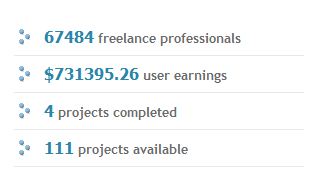
Now a day’s Dolancer is a well-known website for the people of Bangladesh. But people of this country don't know that, how they works and how they pays! Some of the people think that Dolancer is paying them because of clicking on their (Dolancer) Google Ads. Today I am going to share about how they works, pays to the people and earns, Please forgive me if any mistakes are found.
Watch it through your minds
Few days before I visited to a Computer shop and was talking to the Shop Owner and other, one of them asked me, "Dear I heard that you are associate with Freelancing." I replied, "Yes. Sometimes."
He again asked me, "I am also a Freelancer, when did you join at Dolancer?"
I was shocked and told him that I work in Odesk.
Like this way a lots of member of Dolancer told me that. Few days before one of the junior student of our University told in bad sense that, "People who works on Odesk they are too much Greedy, they are also stepping ahed, one day they will be richer than them!.
By hearing this, one of my friend showed his anger to him and stepped forward to beat him, but I stopped him. Whatever, Most of them don’t know that How they are getting their payments? In this post I am going to write it in shortly that the people who is a member of Dolancer, whatever they are doing this is not at all a work and its also not Freelancing. Soon they will fall in a nightmare and will be awakened too after that .
Main Topic:
They are not clicking on public ads (such as Google Adsense), I also thought that they are getting paid for clicking on Google Ads. But from a member I got to know that they have their one click application, they gets there various links, after every 30-60 seconds later, then they have to click on the right answer of the multiple choice question.
For example, after you refresh the page a link will appear, after 45 seconds a multiple question will appear, click the correct answer; you will get paid $ 0.01. You will get more than 100 works likes this in everyday. After a month they will earn minimum of 2,100 Taka each for an account.
They made it to cheat with the people. For example, firstly who will join, he will have to pay 7000 Taka and then he will bring more 5 people here to join, if they joins, then company will get 35,000 Taka (7,000x5=35,000). First person who bring this 5 members will get 2,100 + (700x5)= 5600 Taka. And by this way Company is getting profit of 29400 taka (35000-5600=29400) in a month from 1 member!
It means they are using MLM (Multi Level Marketing) as there base or platform. And by this way they earning from the people of this country.
The people who joins first get most benefits and the rests are gets nothing! In these types of companies. They are using MLM system and that's why their members are increasing day by day. 80% of the peoples get cheated and the 10% of the rest 20% get beaten by the 80% member.
But as a result, the owner of this company will get more profit before this company runs away.
They are telling that whatever they are doing it is "Freelancing & Outsourcing". Now a days Bangladesh is one of the most active Country who is getting more revenue in the Freelancing & Outsourcing sector. This click based work is killing their talents by providing their huge earning offer. Its nothing more than e vogues.
This company also changed the definitions and sectors of Freelancing and Outsourcing. Because they are providing wrong definition of Freelancing and Outsourcing.
Original Post By Mozammel Haq Tranlated and re-edited by: Admin
America's most senior military official has indicated that the country is ready to engage in a conflict with Iran, if President Barack Obama were to give the signal.
Tensions have been growing in the region following international condemnation over Tehran's growing nuclear ambitions.
Last month, Britain's ambassador to Iran was expelled from the country following attacks on the British Embassy. The US is also involved in a standoff over a downed spy drone, which President Mahmoud Ahmadinejad has refused to return despite America's requests.
Iran's President Mahmoud Ahmadinejad and President Barack ObamaPhoto: Reuters/EPA
General Martin Dempsey, chairman of the US joint chiefs of staff, said that the US military had reached a point where they were ready to execute force against Iran if necessary.
In an interview with US media in Afghanistan he said: "We are examining a range of options. I'm satisfied that the options that we are developing are evolving to a point that they would be executable if necessary."
His comments come just days after Leon Panetta, US secretary of defence, said "no options were off the table" in stopping Iran develop a nuclear weapon.
Gen Dempsey said he had been quietly leading behind the scenes preparations for an attack against Tehran but said a war with the nation would be a "tragedy".
"My biggest worry is that it may miscalculate our resolve. Any miscalculation could mean that we are drawn into conflict and that would be a tragedy for the region and the world," he said.
Asked whether the US military is collecting information on the Middle Eastern nation via spy drones, Gen Dempsey said it would be "imprudent" for them not to attempt to find out what they were doing but stopped short of saying they had used unmanned aircraft.
"If you are asking are we gathering intelligence against Iran in a variety of means, the answer is of course," he said. "It would be imprudent of us not to understand what a nation which has declared itself an adversary of the United States is doing."
Gen Dempsey said the US is collaborating with Israel in its intelligence gathering but reiterated that there are no guarantees the Israelis would inform the US before launching an attack.
"We are trying to establish some confidence on the part of the Israelis that we recognise their concerns and are collaborating with them on addressing them," he said.
Leon Panetta, the secretary of defence, said this week that the US was prepared to step in to prevent Tehran realising its nuclear ambitions. He estimated that the country was only a year away from reaching its goal.
"The United States does not want Iran to develop a nuclear weapon," he said. "That is a red line for us and that is a red line for the Israelis. If we have to do it we will do it. If they proceed and we get intelligence that they are proceeding in developing a nuclear weapon then we will take whatever steps necessary to stop them. There are no options that are off the table."
If Iran were to gain a nuclear weapon, it could trigger a nuclear arms race in the Middle East with officials in Saudi Arabia already saying they will look towards developing nuclear capabilities if the Iranians arm themselves.
Further evidence of US reconnaissance missions in the region include the indictment of several alleged CIA spies.
In May this year, Iran's intelligence ministry announced the arrest of 30 CIA "spies" it claimed were conducting sabotage missions.
Another 15 alleged US-Israeli spies were indicted earlier this month and this week Iranian state television showed clips of ex-US Marine Amir Hekmati allegedly confessing to espionage.
Earlier this month, the EU agreed to impose new sanctions against 180 officials in Tehran in an attempt to curtail the nation's nuclear programme. EU foreign ministers also said they were looking at additional measures to impose on Tehran's energy sector.
BEIRUT (AP) — Tens of thousands of Syrian government supporters poured into the streets Sunday to protest an Arab League vote to suspend the country's membership, as Turkey sent planes to evacuate diplomatic staff and their families after a night of attacks on embassies.
Pro-Syrian regime protesters, carry a giant Syrian flag during a demonstration against the Arab League decision to suspend Syria, in Damascus, Syria, on Sunday Nov. 13, 2011. Tens of thousands of pro-regime demonstrators gathered in a Damascus square Sunday to protest the Arab League's vote to suspend Syria over its bloody crackdown on the country's eight-month-old uprising. Saturday's Arab League decision was a sharp rebuke to a regime that prides itself as a bastion of Arab nationalism, but it was unlikely to immediately end a wave of violence that the U.N. estimates has killed more than 3,500 people since mid-March. (AP Photo/Muzaffar Salman)
Facing growing isolation, the Syrian government called for an urgent Arab summit to discuss the country's spiraling political unrest and invited Arab League officials to visit before its membership suspension was to take effect on Wednesday.
In a significant concession, the government said the Arab officials could bring any civilian or military observers they deem appropriate to oversee implementation of an Arab League plan for ending the bloodshed.
The 22-member bloc's vote on Saturday was a stinging rebuke to a regime that prides itself as a bastion of Arab nationalism and left Syria increasingly isolated over its crackdown on an eight-month uprising that the U.N. estimates has killed more than 3,500 people since mid-March.
The violence continued Sunday, with activists reporting at least 11 people killed in shootings by security forces in several parts of the country.
The Local Coordination Committees activist network said at least four of the deaths occurred in the central city of Hama when security forces fired on a group of opposition protesters who infiltrated a pro-government rally in the area.
Sunday's protests in support of the government drew large numbers in the capital and four other cities — a turnout helped by the closure of businesses and schools.
"You Arab leaders are the tails of Obama," read one banner held by protesters accusing the Arab League of bowing to pressure from the U.S. president.
Thousands of people carried red, black and white Syrian flags and posters of President Bashar Assad in a Damascus square. Similar demonstrations were held in the cities of Aleppo, Latakia, Tartous and Hasakeh.
The Syrian leader asserts that extremists pushing a foreign agenda to destabilize Syria are behind the country's unrest, rather than true reform seekers aiming to open the country's autocratic political system. Sunday's demonstrators accused Arab countries of being complicit with the purported conspiracy.
The government called the Arab League decision "illegal," claiming it was intended to set the stage for foreign military intervention like in Libya.
However, the offer to allow a visit by an Arab League ministerial committee and accompanying monitors appeared to signal some will to try to implement an Arab League-brokered deal for ending the violence that the government has so far seemed unwilling or unable to do. The Nov. 2 deal calls for Syria to halt attacks on protesters, pull tanks out of cities and hold talks with the opposition.
There was no immediate reaction from Arab League officials on the Syrian invitation. Arab League Secretary General Nabil Elaraby, on a visit to Libya, demanded immediate implementation of the Arab peace initiative.
Youssef Ahmed, Syria's ambassador to the Arab League, said the official request for an emergency meeting was on its way to the organization and that Syria was awaiting a response.
Iraq's representative with the Arab League has offered Baghdad as a location for the meeting if it is approved.
Members of the Syrian opposition rejoiced and saw the Arab vote to suspend Syria as a step toward greater recognition for their movement.
"This gives strong legitimacy to our cause. ... We consider this decision to be a victory for the Syrian revolution," Bassma Kodmani, a spokeswoman for the Syrian National Council opposition group, told The Associated Press.
Hours after the Arab League vote, pro-regime demonstrators in Syria assaulted the diplomatic offices of countries critical of the Syrian government, including break-ins at the Saudi and Qatari embassies and attacks at Turkish diplomatic posts across the country.
The overnight embassy attacks are likely to stoke anger in Arab states against the regime in Damascus. Arab disapproval in itself may not seriously damage President Assad's hold on power, but if Syria further antagonizes Gulf states, it risks having them build up the Syrian opposition into a unified body that can win international recognition, as happened during Libya's civil war this year.
Syrian security forces had confronted Saturday night's protesters at embassies with batons and tear gas but were unable to stop a group from breaking into the Qatari embassy and bringing down the Qatari flag and replacing it with the Syrian flag. Others entered Saudi Arabia's embassy compound, broke windows and ransacked some areas, the kingdom's media reported.
The kingdom strongly condemned the attack in a Foreign Ministry statement and said it held the Syrian authorities responsible for protecting its interests.
Saudi King Abdullah, who has condemned Assad's crackdown, had already recalled the Saudi ambassador to Syria in August. Kuwait and Bahrain have also recalled their ambassadors.
Protesters also tried to break into the Turkish Embassy in Damascus Saturday and into the country's consulates in the cities of Aleppo and Latakia, Turkey's state-run Anatolia news agency reported. Turkey is not a member of the Arab League but has also been sharply critical of Syria's crackdown, and Turkey's foreign minister welcomed the League vote.
Turkey on Sunday sent a plane to Damascus to evacuate the families of its diplomats as well as nonessential staff, Anatolia reported. The Turkish Foreign Ministry also said Turkey summoned Syria's charge d'affaires who was given a formal protest note demanding protection for its diplomatic missions.
France also said it had summoned Syria's ambassador to "remind" him of Syria's international obligations, after demonstrators tried to attack an honorary French consulate in Latakia and another French office in Aleppo.
On Sunday, hundreds of baton-carrying Syrian riot police in helmets ringed the U.S., Qatari, Saudi and Turkish embassies — all located in the capital's upscale Abu Rummaneh district. Three fire trucks were parked in front of the Turkish Embassy. The Turkish and Qatari embassies were closed for the day but the Saudi Embassy was operating, an operator said.
Here is some Caption about Todays campaign in front of Teachers Students Center (TSC) at University of Dhaka. Captions are captured before the voting campaign starts. It was organized by Dhaka Metropolitan Police (DMP), ATN Bangla & Bangladesh Wonders Promotion Foundation and etc.
Banner
In front of the stage
In front of the Stage
Stage & Voting Place
Police officers are setting PC for voting campaign - 1
Police officers are setting PC for voting campaign - 2
NEW YORK (AP) — They were out to change the world, overthrow the establishment and liberate the poor. But first somebody would have to do something about those bongo drums.
At the Occupy Wall Street protest camp in Manhattan, protesters agonized over what to do about drum players who had turned part of the site into an impromptu dance floor. The neighbors were complaining about the racket. The protesters had tried to put a time limit on the noise, but the drummers were refusing to obey.
FILE - In this Oct. 13, 2011 file photo, Lucas Brinson, 21, from Davis, Calif., takes on the role of a human microphone, relaying information throughout Zuccotti Park's Occupy Wall Street encampment in New York. New York police have prohibited protesters from using a public address system because they do not have a permit for their demonstration. So the protesters have adopted a system of hand signals _ fingers up for agreement, down for disagreement _ and a “human microphone” in which the crowd repeats each word so that everyone can hear. One month after the Occupy Wall Street movement burst onto the scene and inspired similar protests across the country, it remains stubbornly decentralized, complicating everything from enforcing camp rules to writing a national platform. (AP Photo/Bebeto Matthews, File)
"It's an issue, definitely," sighed protester Kanene Holder, 31, on Friday night. "We'll have to work it out."
Reining in a few pesky percussionists would seem to be an easy task for a movement seemingly on the verge of becoming a political force. But one month after it burst onto the scene and inspired similar protests across the country, the Occupy Wall Street protest remains stubbornly decentralized, complicating everything from enforcing camp rules to writing a national platform.
On Saturday the protesters planned to march on bank offices and into Times Square. But while their message against corporate greed has struck a nerve with many Americans, the lack of leaders in Manhattan and at other protest camps has baffled many.
In Minneapolis, Hennepin County Sheriff Rich Stanek has been meeting every morning with a delegation of protesters — "at least, the ones who come forward and say they are the organizers," Stanek said. "It's a little difficult because it seems like each day it's been a completely different group of folks."
Protesters say the decentralization is deliberate and note that other movements, like the 1960s civil rights effort, began in a similarly disorganized way. It also calls to mind the Arab Spring, which had influential protesters but no clear leaders, at least initially.
And some academics who have studied dissent movements say that while being "leaderless" has some drawbacks, it could also have great advantages. Chief among them: It has allowed people with very different backgrounds — like union workers and anarchists — to rally behind the same broad message against corporate greed, without actually agreeing much on where the country should go from here.
"They have achieved popular support so much quicker than anti-war movement, or civil rights movement," said Todd Gitlin, an expert on political dissent at Columbia University.
From its earliest days, the people at the heart of Occupy Wall Street have worked hard to make it a movement without leaders.
The original call for the demonstration came from the editors of the Canadian anti-consumerist magazine Adbusters in mid-July. But since then, no one on the publication's staff has been actively involved in organizing or leading the protests.
The two men who came up with the idea, 69-year-old Adbusters co-founder Kalle Lasn and 29-year-old editor Micah White, have yet to go to New York to see the demonstration.
The large group of activists who began meeting to plan the occupation in midsummer came from a variety of groups and backgrounds, and resolved from the start that they wouldn't elect leaders, appoint a central planning council, or even name lead negotiators to deal with New York's police or City Hall.
"A lot of people can't handle that — it goes to their head," said Joey Pearson, 29, a laid-off auto worker from Cincinnati.
Instead, decisions at the camp in lower Manhattan's Zuccotti Park are made at a General Assembly of protesters that sometimes numbers in the thousands, while the nitty-gritty work of organizing the encampment is carried out by a large number of autonomous work teams that largely function without central oversight.
New York police have prohibited protesters from using a public address system because they do not have a permit for their demonstration. So the protesters have adopted a system of hand signals — fingers up for agreement, down for disagreement — and a "human microphone" in which the crowd repeats each word so that everyone can hear.
On Friday night the General Assembly meeting lurched along through this call-and-response system.
"The GA ..." shouted a member of the Facilitation Committee.
"THE GA!" bellowed the crowd.
"... is now ..."
"IS NOW!"
"... in session."
"IN SESSION!"
A member of the Community Relations Committee outlined the drum problem, summarizing the neighbors' concerns a few words at a time.
The General Assembly had already decided during Thursday night's meeting to limit drum playing, but to no avail.
On Friday, the body failed to reach a consensus. But a smaller group of drummers and mediators later agreed to limit the music to noon to 2 p.m. and 5-7 p.m., said Andrew Smith, 26, of Portland, Ore., who sat in on the negotiations.
The slow pace of decisions has also led to other problems, like keeping the site clean.
Bobby Cooper, who is on the sanitation working group, said volunteers had been planning a mass cleaning of the park for about a week but no decision had been made on their proposals because of drawn-out discussions.
Finally, on Thursday, with the threat of the park's owner evicting protesters to do its own cleaning, the sanitation group got some attention — and some plastic bins to distribute to the occupiers.
"I would have wanted these bins a week ago," said Cooper, 30, of Brooklyn.
In other areas, though, the independent nature of the work teams has allowed them to act efficiently and quickly. From its first days, the protesters have had an aggressive media outreach program. The finance committee worked out an agreement with a nonprofit group in Washington, D.C., that has begun allowing the movement to accept credit card donations online.
To date, some of the biggest events associated with the demonstration have been put in motion by the work teams, rather than the assembly. For example, the group's march several weeks ago to the Brooklyn Bridge — a demonstration that ended in hundreds of arrests and raised the movement's profile — was planned by the direct action working group, said Brooklyn schoolteacher Matt Presto, one of a few dozen "facilitators" who specialize in moderating general assembly meetings, and other large discussion groups.
And people are demonstrating leadership, even if they don't have a formal title, activists said.
"There is not a classification in leaders. But there are people whose voices are respected, and who people want to listen to," said one organizer, Marina Sitrin.
The commitment to consensus on big issues has prevented the group from settling upon a single list of demands to present to the public, protesters say. But they insist that's OK.
"When the civil rights movement started, people didn't come out right out with a big list of demands — they came out in the streets and just said, 'We're not going to accept society the way it is,'" said Ed Needham, 43, a public relations manager from Cambridge, Mass. "That's the stage we're in right now."
A sign near the edge of the protest camp Friday echoed that sentiment.
"We're here, we're unclear, get used to it!" it said.
The movement against nuclear power in the 1970s eschewed big-name leaders or national organizations. So did the early feminist movement, where organizational meetings favored consensus over strong leadership. Quakers have been using the consensus model for hundreds of years.
But political experts say there are drawbacks.
With outsiders not quite certain who is in charge, or who has authority to speak for the group, there is a possibility that the press or public could become confused about what the demonstrations stand for, said John Krinsky, a political science professor at the City University of New York.
Core groups of leaders will eventually emerge, said Gabriella Coleman, an assistant professor in the Department of Media, Culture and Communication at New York University who has been studying Occupy Wall Street and also participated in some of its early planning meetings.
"What happens often is that, sometimes when a tight-knit working group gets to know each other quite well, newcomers, like six months down the line, have a harder time getting involved. There is already a culture, friendship, and it is hard to break into that core group," Coleman said.
The bigger hurdle for the Occupy movement may not be the lack of strong leaders but the large philosophical differences between the small group of demonstrators and the much larger — but less radical — group of outsiders who have been supportive of the protests from afar, Gitlin said.
The young people at Zuccotti Park "really think they are headed for no future. No jobs. Ice caps are melting. Misery in the offing ... You want a new civilization," Gitlin said.
"But most of the people who support you ... they don't want a new civilization. They want to be middle class."
Source: Copyright 2011 The Associated Press. All rights reserved. This material may not be published, broadcast, rewritten or redistributed.