Showing posts with label Islam. Show all posts

Tuesday, November 8, 2011

Law may not be on Muslims' side in NYPD intel case

NEW YORK (AP) — Even before it showed up in a secret police report, everybody in Bay Ridge knew that Mousa Ahmad's café was being watched.

Strangers loitered across the street from the café in this Brooklyn neighborhood. Quiet men would hang around for hours, listening to other customers. Once police raided the barber shop next door, searched through the shampoos and left. Customers started staying away for fear of ending up on a blacklist, and eventually Ahmad had to close the place.
In this Oct. 26, 2011 photo, Mousa Ahmad stands in front of an empty Brooklyn, N.Y., storefront where he used to run a coffee shop. Ahmad says he had to close the coffee shop because police surveillance was scaring away customers. (AP Photo/Chris Hawley)

But when asked if he would consider legal action against the police, Ahmad just shrugs.

"The police do what they want," he said, standing in front of the empty storefront where his café used to be. "If I went to court to sue, what do you think would happen? Things would just get worse."

It's a common sentiment among those who are considering their legal options in the wake of an Associated Press investigation into a massive New York Police Department surveillance program targeting Muslims. Many of the targets feel they have little recourse — and because privacy laws have weakened dramatically since 9/11, they may be right, legal experts say.

"It's really not clear that people can do anything if they've been subjected to unlawful surveillance anymore," said Donna Lieberman, executive director of the New York Civil Liberties Union.

The AP investigation revealed that the NYPD built databases of everyday life in Muslim neighborhoods, cataloguing where people bought their groceries, ate dinner and prayed. Plainclothes officers known as "rakers" were dispatched into ethnic communities, where they eavesdropped on conversations and wrote daily reports on what they heard, often without any allegation of criminal wrongdoing.

The NYPD did not respond to repeated requests for an interview, but it has insisted that it respects the rights of people it watches. Commissioner Ray Kelly says each request for surveillance is thoroughly examined by the department's lawyers.

"The value we place on privacy rights and other constitutional protections is part of what motivates the work of counterterrorism," Kelly told a city council committee. "It would be counterproductive in the extreme if we violated those freedoms in the course of our work to defend New York."

But critics of the surveillance say the NYPD is taking advantage of a general weakening of state and federal restraints, many of them forged during the 1960s and following the Watergate scandal:

—The USA PATRIOT Act, passed after the 9/11 attacks, reduced legal limits on wiretaps imposed by the Omnibus Crime Control and Safe Streets Act of 1968. The same law also amended the Right to Financial Privacy Act of 1978 to allow banks to release records to intelligence agencies investigating terrorism.

—A 2007 law changed the Foreign Intelligence Surveillance Act of 1978, originally a reaction to former President Richard Nixon's spying on political groups, to allow wiretaps of international phone calls.

—In 2002 the Supreme Court decision ruled that students cannot sue universities under the 1974 Federal Education Rights and Privacy Act. That could make it harder for Muslim student groups to seek redress over infiltration by NYPD undercover officers.

The U.S. Department of Justice still has some tools it can use to discipline local police forces.

It can withhold federal money from any police agency that discriminates on the basis of race, color, sex or national origin. Another law allows the Justice Department's Civil Rights Division to sue state and local police forces for any "pattern or practice" that deprives people of their Constitutional rights. In September it cited the statutes in a scathing report about corruption and abuse within the Puerto Rico Police Department.

Rep. Rush Holt, D-N.J. has asked the Justice Department to investigate the NYPD surveillance program.

But in Puerto Rico and elsewhere, the Justice Department has typically focused only on issues of excessive force, illegal traffic stops and other clear violations of police procedure. Since 9/11, the department has not used its civil rights authority against a police department in a national security case.

Lawsuits filed by surveillance targets themselves are notoriously hard to win, said Paul Chevigny, a law professor at New York University and expert on police abuse cases.

"The fact that you feel spooked and chilled by it doesn't constitute an injury," Chevigny said. Even in cases where surveillance notes leak out, the chances of winning a lawsuit are "marginal" unless the leaking was done with the clear intent of harming someone, he said.

In Ahmad's case, police documents obtained by the AP show officers were compiling a report on Moroccan neighborhoods as part of an effort to map the city's Muslim communities. Ahmad's Bay Ridge International Café appears with two other nearby restaurants, along with notes about their ownership, customers and size.

Neighbors were especially suspicious about one physically fit man in his 50s who would spend hours sitting on a bench outside a doughnut shop across from the café, said Linda Sarsour, director of the Arab-American Association of New York, which has its offices down the street.

"It's like, 'Why don't you have a job, bro? Why are you always hanging out in every coffee shop?'" Sarsour said. "That was shady."

In 2009 neighbors got fed up and asked for a meeting with the commander of the local police precinct, Ahmad said. They met in Ahmad's café. The commander did not confirm any surveillance operation, but the strange men on street corners disappeared after that, he said.

Still, the stigma remained, Ahmad said. He changed the café's name, but business never recovered. Finally he sold it, but the new owner did no better and eventually closed it for good.

Over the last 40 years, there has been only one class-action lawsuit that has forced serious changes to an NYPD surveillance program, lawyers say, and those changes have been eroded since the 9/11 attacks.

In 1971, 16 leftists led by lawyer Barbara Handschu sued the police department for spying on them. In 1985 they settled the case in exchange for a set of rules, known as the Handschu Guidelines, that set up a three-member panel to oversee NYPD surveillance operations.

The rules also said detectives could only start an investigation when they had "specific information" about a future crime.

"An individual's or organization's political, religious, sexual or economic preference may not be the sole basis upon which the (police intelligence division) develops a file or index card on that individual or organization," the rules said.

In 2003 a judge agreed to relax the rules. Under the new rules, known as the Modified Handschu Guidelines, NYPD intelligence chief David Cohen can act alone to authorize investigations for a year at a time. He can also authorize undercover operations for four months at a time.

Most importantly, the rule requiring police to have "specific information" was loosened. It now says only that facts should "reasonably indicate" a future crime.

Activists say they have not ruled out going to court over the latest NYPD program. But at a "strategy meeting" held in Manhattan on Wednesday, the discussion centered on preparing for a Nov. 18 protest march and on organizing "know your rights" seminars at mosques and community centers.

Organizers believe they need to build a mass movement against the surveillance program first, so that people like Ahmad will feel more confident about coming forward and filing lawsuits, said Cyrus McGoldrick, civil rights manager for the Council on American-Islamic Relations, who ran Wednesday's meeting.

"That way if there's a court date, it's not just 10 people sitting there, it's 1,000 people outside the courthouse, every day," he said. "People need to feel there is a movement protecting them before they take on the police. Apathy is not our problem — fear is our problem."

As the 9/11 attacks recede into the past, state and federal rules may eventually swing toward privacy rights again, said Judith Berkan, a member of the advisory board of the National Police Accountability Project, a group of civil rights lawyers.

But until then, surveillance targets would likely face a difficult court battle, she said.

"I think if the government treats you different because you're from a particular part of the world, even if the surveillance is in a public place, it might violate the constitution," Berkan said. "But it's not a favorable judicial climate for me to make those kinds of arguments today."

Source: The Associated Press

Sunday, November 6, 2011

Muslim hajj pilgrims perform devil stoning ritual

MINA, Saudi Arabia (AP) — Chanting "God is great," millions of Muslims on Sunday stoned pillars representing the devil in a symbolic rejection of temptation on the second day of their annual hajj pilgrimage, a day that also marks the start of the Islamic holiday of Eid al-Adha.
Muslim pilgrims cast stones at a pillar, symbolizing the stoning of Satan, in a ritual called "Jamarat," the last rite of the annual hajj, in Mina near the Saudi holy city of Mecca, Saudi Arabia, Sunday, Nov. 6, 2011. The annual Islamic pilgrimage draws 2.5 million visitors each year, making it the largest yearly gathering of people in the world. (AP Photo/Hassan Ammar)

Vast crowds cast pebbles as they flowed past the three pillars, which now resemble curved walls, in a four-level sprawling concrete structure built to expedite the flow of pilgrims. The ritual will be repeated for two more days, with participants eventually throwing stones at all three pillars.

he ritual in the desert valley of Mina commemorates Abraham's stoning of the devil, who is said to have appeared three times to the prophet to tempt him.

It is one of the most dangerous stages of the hajj, with the press of people around the pillars creating the risk of a stampede. In 2004, 244 people were killed, and the following year at least 360 others were killed when several pilgrims tripped over baggage while others behind them kept pushing ahead. Saudi authorities subsequently built the current complex to reduce the stampede danger.

Saudi authorities said Sunday that more than 2.9 million Muslims were performing the hajj this year.

Male pilgrims in the two-piece seamless white robes worn during the hajj, and women covered head to foot except for their hands and faces, chanted "God is great" while casting the pebbles.

"Hurry up, pilgrims," Saudi security officers called out through loudspeakers, to prevent crowds from building up next to the pillars.

Afterward, pilgrims shaved their heads or clipped off a lock of hair, a tradition dating back to the Prophet Muhammad's own pilgrimage. They are also required to slaughter a lamb or goat, representing the lamb that Abraham sacrificed in the place of his son Ishmael, although pilgrims may arrange for this to be done in a different location or in their own countries.

Sunday also marks the start of Eid al-Adha in remembrance of Abraham's near-sacrifice of his son.

"Thank God that we are doing hajj this year. May God protect all Arab and Islamic countries," said Dina Mohammed Ramadhan, a 27-year old pilgrim from Egypt, as she emerged from the crowed with her husband pushing her two babies in a carriage.

The five-day pilgrimage is packed with symbolism and ritual aimed at cleansing the soul of sin and winning absolution by tracing the footsteps of the Prophet Muhammad and of Abraham, whom Muslims view as a forefather of Islam.

Source: The Associated Press

Sunday, October 23, 2011

Download The Holy Quran (In all language)

English - The Holy Quran Translation of the Meanings of The Noble Quran in the English Language

DOWNLOAD
 Size: 29.5 MB
Format: PDF


French - Français Le Noble Coran Et la Traduction en Langue Français de ses Sens
Translation of the Meanings of The Noble Quran in the French Language

DOWNLOAD
 Size: 29 MB
Format: PDF


German - Deutsch Der edle Quran Und die übersetzung seiner Bedeutungen in die deutsche Sprache
Translation of the Meanings of The Noble Quran in the German Language

DOWNLOAD
 Size: 49.3 MB
Format: PDF


Russian - Российская Священный Къуран Перевод смыслов Кулиева Эльмира
Translation of the Meanings of The Noble Quran in the Russian Language

DOWNLOAD
 Size: 2.11 MB
Format: PDF

Chinese - 中文 神圣古兰经 (神聖古蘭經) Translation of the Meanings of The Noble Quran in the Chinese Language

DOWNLOAD
 Size: 78.5 MB
Format: PDf


Spanish - Español El Noble Corán y su traducción comentario en Lengua Española
Translation of the Meanings of The Noble Quran in the Spanish Language

DOWNLOAD
 Size: 29 MB
Format: PDF


Greek - Ελληνικά To Iepo Kopanio Translation of the Meanings of The Noble Quran in the Greek Language

DOWNLOAD
 Size: 25 MB
Format: PDF


Indonesian - Bahasa Indonesia Al Quran dan terjemahnya Translation of the Meanings of The Noble Quran in the Indonesian Language

DOWNLOAD
 Size: 98.7 MB
Format: PDF


Turkish - Türkçe KUR'AN-I KERİM Translation of the Meanings of The Noble Quran in the Turkish Language

DOWNLOAD
 Size: 2.3 MB
Format: ZIP


Urdu - اردو قرآن کریم قرآن کریم مع اردو ترجمہ وتفسیر
Translation of the Meanings of The Noble Quran in the Urdu Language

DOWNLOAD
 Size: 58.2 MB
Format: PDF


Korean - 한국어 성 꾸란 성 꾸란 의미의 한국어 번역 다운로드
Translation of the Meanings of The Noble Quran in the Korean Language

DOWNLOAD
 Size: 34.9 MB
Format: PDF


Persian - فارسی قرآن كريم قرآن كريم و ترجمه آن
Translation of the Meanings of The Noble Quran in the Persian Language

DOWNLOAD
 Size: 30.8 MB
Format: PDF


Albanian - shqip Kur’an-i Kur’an-i, Përkthim me komentim në gjuhën shqipe
Translation of the Meanings of The Noble Quran in the Albanian Language

DOWNLOAD
 Size: 38.9 MB
Format: PDF


Somali - Afsoomaali Quraanka Kariimka Quraanka Kariimka Iyo Tarjamada Macnihiisa Ee Afka Soomaaliga
Translation of the Meanings of The Noble Quran in the Somalia Language

DOWNLOAD
 Size: 31.8 MB
Format: PDF


Bosnian - Bosanski Kur'an Kuran s prevodom na Bosanski, preveo Besim Korkut
Translation of the Meanings of The Noble Quran in the Bosnian Language

DOWNLOAD
 Size: 52.7 MB
Format: PDF


Portuguese - Português Nobre Alcorão Tradução do sentido do Nobre Alcorão
Translation of the Meanings of The Noble Quran in the Portuguese Language

DOWNLOAD
 Size: 30.9 MB
Format: PDF


Kazakh - Қазақ тілі ҚҰРАН КӘРИМ ҚҰРАН КӘРИМ ҚАЗАҚША МАҒЫНАСЫ ЖӘНЕ ТҮСІНІГІ
Translation of the Meanings of The Noble Quran in the Kazakh Language

DOWNLOAD
 Size: 28.1 MB
Format: PDF


Yoruba - Yorùbá Al Qur'an Alapọnle Al Qur'an Alapọnle Pẹlu Itumọ rẹ ni ede Yoruba
Translation of the Meanings of The Noble Quran in the Yoruba Language

DOWNLOAD
 Size: 23.2 MB
Format: PDF


Vietnamese - Việt Thiên Kinh Qur'an Thiên Kinh Qur'an và Bản ý dịch nội dung nghĩa bằng Việt ngữ
Translation of the Meanings of The Noble Quran in the Vietnamese Language

DOWNLOAD
 Size: 91.1 MB
Format: PDF


Azerbaijani (Azeri) - Azərbaycanca Əl-Fatihə Surəsi və Cüz Əmmənin Əl-Fatihə Surəsi və Cüz Əmmənin Azərbaycan Dilinə Tərcüməsi
Translation of the Meanings of Surah al-Faatihah and Juz 'Amma in the Azerbaijani (Azeri) Language

DOWNLOAD
 Size: 2.9 MB
Format: PDF


Hausa - AlKur'äni Mai Girma AlKur'äni Mai Girma Da Kuma Tarjaman Ma'anõninsa Zuwa Ga Harshen Hausa
Translation of the Meanings of The Noble Quran in the Hausa Language

DOWNLOAD
 Size: 34 MB
Format: PDF


Brahui - براهوئي قرآن كريم Translation of the Meanings of The Noble Quran in the Brahui Language

DOWNLOAD
 Size: 30 MB
Format: PDF


Chichewa - Qur'an Yolemekezeka Qur'an Yolemekezeka yotanthauzidwa m'chichewa
Translation of the Meanings of The Noble Quran in the Chichewa Language

DOWNLOAD
 Size: 25 MB
Format: PDF


Filipino - Iranon sa Pilimpinas So Quran al Karim So Quran al Karim ago so kiy pema ana iron ko basa a iranon sa pilimpinas
Translation of the Meanings of The Noble Quran in the Filipino Language

DOWNLOAD
 Size: 28.7 MB
Format: PDF

Tuesday, October 18, 2011

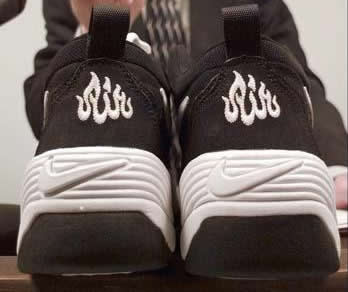
“Allah” word is visible in on Nike shoes (An incident of 2008)

undefinedNow, I don’t know about you but I think perhaps us Musilms have become too tetchy, OK so it kind of has a passing resemblance to Arabic and the central part of the design looks like lam, lam, alif, it also looks like a “W” with bits next to it. To me it resembles fire more than anything else and even has a passing resemblance to the Hindu “Om” symbol [Om wiki entry]. I emailed Nike about this and got the following reply back from their Consumer Affairs department today [20-OCT-2008]:
Dear Masud A. Khan,

Thank you for your email.

Unbeknown to Nike the script logo used on the shoe could be seen to resemble the word “Allah” written in Arabic-style script.

This is an issue we took, and still take, very seriously. Once we became aware of this situation shortly after the product went on sale in 1996, we immediately issued a recall of the product from worldwide sale and a public apology to the Islamic community.

As the product was designed and originally sold in the US, throughout this process we worked closely with the Council for American Islamic Relations (CAIR) to resolve the issue. They helped us in our efforts to rectify our mistake and to communicate our apologies to all Muslims. I attach a copy of the press release that was issued at the time outlining steps taken by Nike to rectify the issue.

We hope that you will understand that it was never out intention to offend the Islamic community, and that we have undertaken everything possible to resolve the issue and communicate our sincere apologies.

Nike has the utmost respect for all religions, cultures and individuals, and would never intentionally offend anyone. If you have any questions or further concern regarding this issue please do not hesitate to contact us.

Yours sincerely,
Leanne Fowler
Consumer Affairs Department
Nike UK Ltd


They even included a statement (first put out in 1997) that they put out after reaching an accord with CAIR in the USA as follows:

NIKE REACHES ACCORD WITH ISLAMIC GROUP – CAIR

Beaverton, Oregon, June 24, 1997 – NIKE today announced an agreement to ease Muslim concerns over the logo design on a range of summer basketball products.
“Through a long process of discussion, we have resolved our differences of opinion with the Muslim community,” said Martin Coles, NIKE’s Vice President, Europe, “While we never intended to offend, we did; we have done everything possible to communicate our sincere apologies and to address issues related to the distribution of any products offensive to the Muslim community.”
“The potential for confusion was first identified by one of our Muslim distributors,” said Coles, “We immediately affected design alterations we believed would avoid offense. Since CAIR’s alert, we have worked to mitigate the impact on the Islamic community, and have made organisational changes to ensure that similar misunderstandings are not repeated.”

The chronology of this event includes the following:

1. In late September, NIKE’s Muslim distributor in the Middle East voiced concern over the logo appearing on salesman samples of a range of summer basketball shoes — the script logo resembled the Arabic word “Allah”.

2. In addition to raising concern over this initial logo design, their distributor also suggested a number of ways to revise the logo that would (should) be acceptable to the Muslim community.

3. A design change was immediately ordered. The original logo was dropped, and the “A” was clearly separated from the “ir” on the commercial version of the product.

4. In mid-March, NIKE received a letter from the Council on American Islamic Relations (CAIR) alerting them that samples of summer basketball shoes with the original logo had been seen in the Muslim community.

5. On March 27, CAIR indicated that commercial product with the amended logo, becoming available at retail, included a graphic design that could still  “be interpreted as the Arabic word ‘Allah’” . CAIR demanded the following of NIKE:

- an apology to Muslims
-an internal investigation of how this incident occurred.
-sensitivity training on Islam for Nike employees
-the immediate recall of all shoes using either offensive symbol

6. Since that time, NIKE has taken the following steps to account for and resolve this issue:

7. NIKE has apologized to the Islamic community for any unintentional offense to their sensibilities.

8. NIKE has implemented a global recall of the original salesman samples, including an accounting of any samples which may have been sold.

9. NIKE has diverted shipments of the commercial products in question from “sensitive” markets. To date, over 30,000 pairs have been diverted from Saudi Arabia, Lebanon, Kuwait, Malaysia, Indonesia and Turkey.

10. NIKE has discontinued all models with the offending logo. No further product with either version of the logo will be produced.

11. NIKE has agreed to pull back all remaining product in their distribution center.

12. NIKE has implemented organizational changes to their design department to tighten scrutiny of logo design. Responsibility has been centralized into one department and all graphic designs must now be approved by a design review board.

13. NIKE is working with CAIR to identify Muslim design resources for future reference.

14. NIKE has taken measures to raise their internal understanding of Islamic issues. Specifically:

-Worked with CAIR to identify reference materials to locate in their Design Library
-Scheduled a discussion on Islamic imagery at their next Design Summit
-Centralize the graphic design process to ensure those with familiarity in Islamic issues evaluate all graphic designs
-Conducted a formal investigation into this issue, and CAIR is satisfied that no deliberate offense to the Islamic community was intended.

“I am glad we were able to come to a mutually acceptable understanding,” said Coles, ” I believe that we emerge from this process with a deeper understanding of Islamic sensibilities and a stronger bridge into Muslim communities.

______________________________________________________

Now, considering the initial controversy was in 1996 and was seemingly resolved a year later in 1997, why then in 2008 do we still have Musilms circulating this non-issue and then calling into question the faith of people who do not then forward the email on to an x number of other Muslims?
undefined
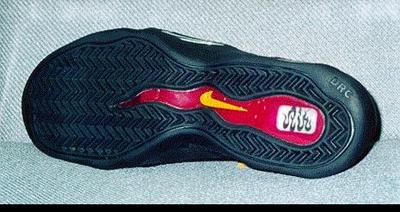
The sole of a Nike "Air" shoe.


It always boils down to the same question, whether it is something about Coke, Pepsi, Nike etc – Why would a multi-national corporation like Nike, with multi-Million dollar interests in the Middle-East and the Muslim world, purposely offend Muslims and jeopardise profits on purpose and then go to the expense of a product recall?

Come on people move on and occasionally use your brain on such matters and especially if the issue is dead, buried and, like this one, actually decomposed.

But in that case I just want to say, just visit this link of a post, It is not at all a new thing to Nike. They are continuously doing the same thing! Is it was just mistakes or anything else we don't know about it? But we Muslims are too much Conservative in this side.


Source: MasudBlog