Showing posts with label Student. Show all posts

Thursday, August 11, 2011

Facial recognition in use after riots

LONDON (AP) — Facial recognition technology being considered for London's 2012 Games is getting a workout in the wake of Britain's riots, a law enforcement official told The Associated Press on Thursday, with officers feeding photographs of suspects through Scotland Yard's newly updated face-matching program.
The official said that the Metropolitan Police's sophisticated software was being used to help find those suspected of being involved in the worst unrest the force has faced in a generation, although he cautioned that police had a host of other strategies at their disposal.
"A lot of tools are being used to hunt down these criminals, and that's just one of them," the official said on condition of anonymity because he was not authorized to speak about an ongoing investigation. "The issue is that you have to have a good picture of a suspect and it is only useful if you have something to match it against. In other words, the suspect already has to have a previous criminal record."
A press officer with Scotland Yard — who also spoke anonymously, in line with force policy — confirmed Thursday that facial recognition technology was at the police's disposal, although he gave few other details. He said that generally the technology would only be used to help identify those suspected of serious crimes, such as assault, and that in most cases disseminating photographs to the general public remains a far cheaper and more effective way of identifying people.


Chief Superintendent Simon Ovens, left, commander of the Westminster Burglary Squad,
and another officer apprehend a suspect following a raid by police in an attempt to
recover property stolen during the recent civil disturbances.
Britain's Prime Minister David Cameron promised vigorous and wide-ranging
measures to restore order and prevent riots erupting again on Britain's streets -
including taking gang-fighting tips from American cities.
Cameron told lawmakers there would be no "culture of fear" on Britain's streets,
as police raided houses to round up more suspects from four days of rioting and
looting in London and other English cities.
(AP Photo/Nigel Howard/Evening Standard, pool)
To that end the police have released two dozen photos and videos to the picture-sharing website Flickr, where they've already gathered some 400,000 hits. Some of those photographs have also been published by Britain's brash tabloid press. The Sun recently plastered them across its front page, along with a headline urging readers to denounce looters to the police.
The photographs on Flickr are mainly grainy images pulled from closed circuit television cameras, which may not be of much use to face-matching software. But other pictures — taken by police surveillance teams, published in the media or snapped by passers-by — could provide higher-resolution images.
Both officials said that the quality of images would be key.
The facial-recognition technology used by police uses a face like a grid, measuring the distance between a person's nose, eyes, lips and other features. It has recently been upgraded, according to an article published last year in Scotland Yard's internal publication, "The Job."
According to the March 2010 article, the new program has been shown to work far better than older versions of the face-matching technology. One expert cited by the article said it had shown promise in matching high-quality, face-on shots taken from surveillance photographs, mobile phones, passports or even off the Internet.
A person with the Olympic planning committee recently told the AP that facial recognition software was being considered for use during the Olympic Games, although he would not go into details about the specific technology being used.
He spoke on condition of anonymity because of the sensitivity of security preparations.

Source: APNewsBreak
Copyright 2011 The Associated Press. All rights reserved. This material may not be published, broadcast, rewritten or redistributed.


Cameron: No culture of fear on UK's streets

LONDON (AP) — British Prime Minister David Cameron vowed Thursday there would be no "culture of fear" on Britain's streets, as police raided houses to round up more suspects from four days of rioting and looting in London and other English cities.
Cameron told lawmakers that the government was "acting decisively" to restore order after riots, which shocked the country — and the world.
"We will not allow a culture of fear to exist on our streets," Cameron said. "We will not let a violent few beat us."
Lawmakers were summoned back from their summer vacations for an emergency session on the riots as government and police worked to regain control, both on the streets and in the court of public opinion. Calm prevailed in London overnight, with a highly visible police presence watching over the capital.
Cameron promised tough measures to stop further violence and said "nothing should be off the table," including water cannons and plastic bullets.


Metropolitan Police officers prepare to carry out a raid on a property on the Churchill Gardens estate in Pimlico, London during an operation where police hope to recover property stolen during the recent disturbances in the capital Thursday Aug. 11, 2011. British Prime Minister David Cameron says the government is "acting decisively" to restore order after riots that shocked the country. Cameron told lawmakers that "we will not allow a culture of fear to exist on our streets." (AP Photo/Anthony Devlin/PA Wire) UNITED KINGDOM OUT

He said riot-hit businesses would receive help to get back on their feet, and promised to look to the United States for help in fighting the street gangs he blamed for helping spark Britain's riots.
Cameron told lawmakers that he would look to cities like Boston for inspiration. He also mentioned former Los Angeles and New York Police Chief Bill Bratton as a person who could help offer advice.
The government, police and intelligence services were looking at whether there should be limits on the use social media sites like Twitter and Facebook to spread disorder, he said.
Meanwhile the number of people arrested in London rose to 922 since trouble began on Saturday, with 401 suspects charged.
Deputy Assistant Commissioner Stephen Kavanagh said raids to round up suspects began overnight, and more than 100 warrants would be executed.
Hugh Orde, head of the Association of Chief Police Officers, said there would be "hundreds more people in custody" by the end of the day.
Deputy Prime Minister Nick Clegg said the "sociological debate" about the origins of the violence was for the future.
"Right now it's important that people are reassured that their streets are made safe, their homes are made safe and society is allowed to move on," Clegg told BBC radio.
The London police said it would keep up the huge operation — involving 16,000 officers — for at least one more night.
Tensions remained high even in the absence of any major incidents.
There was a brief outbreak of trouble in Eltham, southeast London, where a group of largely white and middle-aged men who claimed to be defending their neighborhood pelted police with rocks and bottles. Police said the incident had been "dealt with" and a group was dispersed.
There were chaotic scenes at courthouses, several of which sat through the night to process scores of alleged looters and vandals, including an 11-year-old boy.
The defendants included Natasha Reid, a 24-year-old university graduate who admitted stealing a TV from a looted electronics store in north London. Her lawyer said she had turned herself in because she could not sleep because of guilt.
Also due to appear in court were several people charged with using social networking sites like Twitter and Facebook to incite violence.
Other cities where looters had rampaged earlier this week also came through the night largely unscathed, though for the first time minor disturbances were reported in Wales.
Tensions flared in Birmingham, where a murder probe was opened after three men were killed in a hit-and-run incident as they took to the streets to defend shops from looting.
Chris Sims, chief constable of West Midlands Police, said a man had been arrested on suspicion of murder. Police on Thursday were given more time to question him.
"We needed a fightback and a fightback is under way," Cameron said in a somber televised statement outside his Downing Street office after a meeting of the government's crisis committee. He said "nothing is off the table" — including water cannons, commonly used in Northern Ireland but never deployed in mainland Britain.
Senior police officers, however, indicated they had no plans to use water cannons.
The violence has revived debate about the Conservative-led government's austerity measures, which will slash 80 billion pounds ($130 billion) from public spending by 2015 to reduce the country's swollen budget deficit.
Cameron's government has slashed police budgets as part of the cuts. A report last month said the cuts will mean 16,000 fewer police officers by 2015.
London Mayor Boris Johnson — like Cameron, a Conservative — broke with the government to say such cuts are wrong.
"That case was always pretty frail and it has been substantially weakened," he told BBC radio. "This is not a time to think about making substantial cuts in police numbers."
Scenes of ransacked stores, torched cars and blackened buildings have frightened and outraged Britons just a year before their country is to host next summer's Olympic Games, bringing demands for a tougher response from law enforcement.
Britain's soccer authorities were talking with police to see whether this weekend's season-opening matches of the Premier League could still go ahead in London. A Wednesday match between England and the Netherlands at London's Wembley stadium was canceled.
Britain's riots began Saturday when an initially peaceful protest over a police shooting in London's Tottenham neighborhood turned violent. That clash has morphed into general lawlessness in London and several other cities that police have struggled to halt.
While the rioters have run off with goods every teen wants — new sneakers, bikes, electronics and leather goods — they also have torched stores apparently just to see something burn. They were left virtually unchallenged in several neighborhoods, and when police did arrive they often were able to flee quickly and regroup.


Source: 
Copyright 2011 The Associated Press. All rights reserved. This material may not be published, broadcast, rewritten or redistributed.


Monday, August 8, 2011

London riots needed Twitter news curators


The past two nights saw violence and looting in north London as protesters took to the streets – first to express their frustration with the police following a recent shooting, and then last night, it seems, simply to cause trouble and get free goods from shops.
With TV news struggling to keep up and Twitter racing ahead of events like an excited child, we really need trustworthy people to sort truth from fiction in real time on Twitter – it’s one of the new functions of journalism. But who do we trust – and who pays for Twitter journalism?
As you’d expect, last night Twitter was busy with reports of incidents taking place around the city. It was hard to tell what was accurate, what was exaggerated and what was plain false. Like many others in this situation, I turned to the 24 hour rolling news channels for – I hoped – some clarity on exactly what was happening. Instead, I saw live reports from the scene of earlier disturbances which had since subsided, and pre-recorded reports on the aftermath of the previous night’s events.

TV can’t keep pace with Twitter

I asked Neal Mann, a freelance journalist who was working for Sky News last night, why there had been no mention of wider disturbances beyond the location of the evening’s first outbreak, Enfield, despite widespread reports on Twitter. His reply? ”People have to be aware of TV logistics very different to print journalists.”
Yes, TV couldn’t keep up – and with good reason. Camera crews can’t magically appear at the scene of a reported incident, and the nature of Twitter means that a small incident can be blown out of all proportion as multiple retweets and retellings of the same story amplify the significance of minor events. Like the rest of us, TV journalists were trying to unpick truth from fiction with the added problem that they can’t report on rumours as readily as we might like them to – especially when they have few facts to share with us and no-one on the scene.

One solution to this problem that has been proffered a number of times of late is ‘journalist-curators’, who scour Twitter for news of an unfolding event and use their skills to sort the fact from the fiction. An oft-cited good example of this kind of journalist is NPR’s Andy Carvin who has been covering this year’s Middle East uprisings as they occurred via his Twitter account, through well-chosen retweets, while skilfully unpicking rumours to get to the truth.
The aforementioned Neal Mann does a similar job in the UK during breaking news scenarios. As I’ve previously noted, he was one of the few journalists to check the facts when it was widely, and falsely, claimed on Twitter that Piers Morgan had been suspended from his job at CNN.
No matter how good they are though, there are two problems with these Twitter-based curators of news:

How do we find them?

No matter how good a reputation these curators may have, it can be difficult for the average Twitter user without journalistic training to tell the difference between someone filtering facts from rumours and someone just retweeting everything they hear that sounds juicy. The ‘flat’ nature of Twitter means that all users have equal importance. While that may be a blessing in most cases, when it comes to assessing trustworthiness, of someone you’ve never heard of before, it can be a problem.
Potential solution: It’s not ideal, but some kind of ‘accreditation’ for journalists skilled at acting as a Twitter-based news filter might be one solution. This could be similar to the ‘Verified User’ badge placed by Twitter on high-profile users’ accounts to help people differentiate real and fake celebrity accounts.
‘Accredited’ Twitter journalists would have the obligation to report responsibly on Twitter but would have the benefit of their tweets showing up more prominently in search results for breaking news events which they’re covering. Of course, this places an increased administration burden on Twitter staff, and would likely lead to a rush of journalists applying to get the accredited status, if only to satisfy their ego.

Who pays them?

Most news agencies have Twitter accounts for one reason – to drive traffic to their websites. There’s little value in breaking news in a tweet unless that tweet is accompanied by a link that will drive eyeballs to your website where advertising revenue can be accrued. Therefore, there’s little incentive to have someone acting as ‘a news agency for Twitter’ in an official capacity for a news brand.
Andy Carvin works for NPR, which is a public service broadcaster; Neal Mann is freelance. While there are some examples of good commercial news brands employing someone to perform a journalistic function largely on Twitter (Reuters’ Anthony De Rosasprings to mind), it’s simply not in most of their interests to do that. Why sacrifice a traffic-driving scoop by discussing it on Twitter first and tipping off your rivals to it?
Potential solution: As this form of journalism develops, established major news brands may adopt the process on officially branded accounts. I can see the BBC, for example, doing this as it lacks the commercial imperative to drive traffic to its site. Commercial news organisations may see real-time curation-journalism as a useful brand-building exercise, but the need to link to their own websites could dissuade them from linking to rival sources, thus reducing their value to readers.
Better filters for emerging events are desperately needed on Twitter, but we’re still a long way away from them being commonplace and easily findable by all users of the service.

Source: The Next Web


Police arrest over 160 in weekend London riots

LONDON (AP) — Police arrested 160 people during a weekend of riots and looting that erupted in a disadvantaged London neighborhood just five miles (eight kilometers) from the site of next year's Olympic Games.
Groups of masked and hooded young people looted shops, attacked police officers and set fire to vehicles in violence that has raised questions about security ahead of the 2012 Olympics and revealed pent-up anger against the city's police.
Around 35 police officers were injured, including three hit by a car while trying to make arrests in east London.


Broken windows at the entrance of an electronics store in a shopping center in Enfield area of north London, Monday, Aug. 8, 2011. New unrest erupted in London late Sunday, a day after rioting and looting amid alleged community anger over a fatal police shooting. Police arrested 160 people after a weekend of riots and looting, as scattered copycat violence spread from a disadvantaged north London neighborhood to other parts of the city, authorities said Monday.(AP Photo/Akira Suemori)

Police commander Christine Jones said officers were "shocked at the outrageous level of violence directed against them."
The violence broke out in the gritty north London suburb of Tottenham on Saturday night amid community anger over a fatal police shooting of a 29-year-old father of four. Police said "copycat criminal" violence spread to other parts of the city Sunday night and early Monday, including, briefly, London's main shopping and tourist district at Oxford Circus.
The protest over the death of Mark Duggan, who was gunned down in disputed circumstances Thursday, was initially peaceful. But it turned ugly as between 300 and 500 people gathered around Tottenham's police station late Saturday. Some protesters filled bottles with gasoline to throw at police lines, others confronted officers with makeshift weapons — including baseball bats and bars — and attempted to storm the station.
Tottenham was relatively peaceful on Sunday night, but the violence spread to Walthamstow Central in east London, where, police said 30 youths vandalized and looted some shops. Another 50 people damaged property in Oxford Circus.
In the south London neighborhood of Brixton — the scene of riots in the 1980s and 90s — youths smashed windows, attacked a police car, set fire to garbage bins and stole video games, sportswear and other goods from stores.
"It's obviously stemmed from what's happened in Tottenham, but we are 10 miles away," said Williams Falade, manager of a gym that was closed Monday because the restaurant next door had been attacked. "It was like it was an excuse. Things like this will happen but they should happen for better reasons."
Tottenham has a history of unrest. It was the site of the 1985 Broadwater Farm riots, a series of clashes that led to the savage stabbing of a police officer and the wounding of nearly 60 others — brutally underscoring tensions between London police and the capital's black community.
Relations have improved but mistrust still lingers, and the shooting of Duggan — a popular figure in the community — has stirred old animosities.
Very few details of Duggan's death have been released, although police said initially an officer was briefly hospitalized after the shooting — suggesting there was an exchange of fire. Media reports said a bullet had been found lodged in the officer's radio.
In a bid to calm the swirling rumors, the Independent Police Complaints Commission, which is investigating the shooting, released a statement saying "speculation that Mark Duggan was 'assassinated' in an execution-style involving a number of shots to the head are categorically untrue." It also said a "non-police firearm" was recovered at the scene.
But the circumstances of his death remain unclear.
Although a gun was recovered from the scene, The Guardian newspaper reported that the bullet in the radio was police-issue, indicating Duggan may not have fired at the officer.
Tottenham has a history of unrest. It was the site of the 1985 Broadwater Farm riots, a series of clashes that led to the savage stabbing of a police officer and the wounding of nearly 60 others — brutally
underscoring tensions between London police and the capital's black community.
Relations have improved but mistrust still lingers, and the shooting of Duggan — a popular figure in the community — has stirred old animosities.
With images of buildings and vehicles in flames broadcast around the world less than a year before the city hosts the Olympic Games, London Mayor Boris Johnson was criticized for not returning from vacation after Saturday's riot.
Kit Malthouse, the deputy mayor for policing in London, defended his boss.
"Should he be reacting to these criminal provocateurs in that way by coming back? I think that is kind of rewarding them," he told Sky News. "Modern communications mean he can stay in touch and participate in meetings from around the globe."

Copyright 2011 The Associated Press. All rights reserved. This material may not be published, broadcast, rewritten or redistributed.
Source: Copyright 2011 The Associated Press. All rights reserved. This material may not be published, broadcast, rewritten or redistributed.

550 detained in Chile student protests!

Police in the Chilean capital Santiago fired water cannons and tear gas on Thursday to disperse hundreds of student protesters calling for education reforms, and detained at least 130 people.
undefined
Students in Chile want the national government to take over the public school system, where 90 per cent of the country's 3.5 million students are educated. The students say the system is underfunded and deeply inequitable.

Source: AnonOps

Thursday, July 28, 2011

Sexual Assault By A Teacher Triggers Student Uprising in Dhaka

undefined
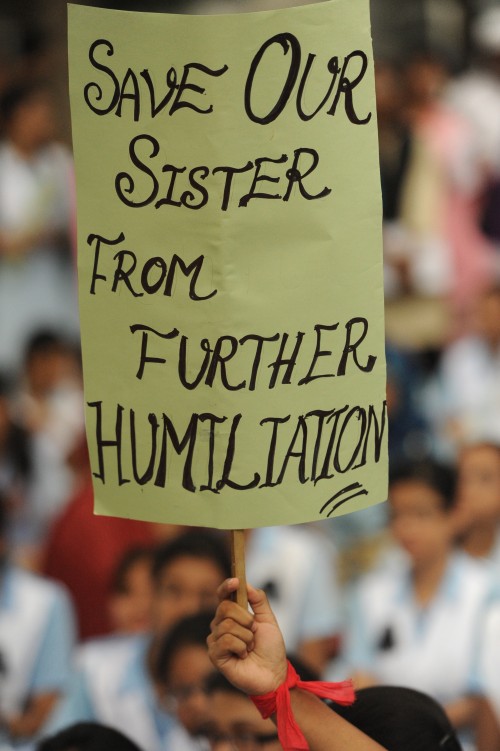
The recent events at the Viqarunnisa Noon School and College (VNSC), a prestigious girls educational institution in the Bangladesh capital Dhaka, has stirred much buzz in the Bangladeshi blogosphere. Porimol Joydhor, a teacher of Bangla department of the school’s Bashundhara campus, was accused of raping a female student of class ten at VNC while giving her private tuition in his premises.


According to reports Porimol recorded the incident in his mobile and threatened the victim that he would post it on internet if she divulged the matter. As the investigations began more shocking information were revealed. The incident took place in late May and the school headmaster at Basundhara branch did not take any action against the teacher after the victim reported it in a letter. Guardians alleged that because Porimol was a student leader of the ruling party the authorities ignored these allegations. When the news broke out in the media [bn] in early July the school governing body was put under a lot of pressure. Porimol was sacked and went into hiding. The committee also suspended two other teachers for their alleged misconduct with girl students.

The events and the student protests caused much uproar in the country and more drama unfolded as the students continued their protest which led to the replacement of the school principal. The mainstream media was accused of using sensationalism and politicizing the events. But some students continued to share their sides of the story via blogs and Facebook.


At last after the three-fold campaign via Blog, Facebook and street protests the police was forced to arrest Porimol. Wednesday (6th of July) at around noon he was arrested from a relatives house in Keraniganj (near Dhaka).


The students were still in doubt whether the victim would get justice and continued with their protests. Their demands included:
  • All the accused should be brought to justice
  • The school principal and the school management should clarify why they did not do anything against the accused
  • Demanding resignation of the school principal for protecting Porimol.
Students hold placards denouncing sexual abuse at their school, as they gather at the Central Shaheed Minar.Image by Safin Ahmed. Copyright Demotix.


The students were still in doubt whether the victim would get justice and continued with their protests. Their demands included:


All the accused should be brought to justice
The school principal and the school management should clarify why they did not do anything against the accused
Demanding resignation of the school principal for protecting Porimol.
Many people became furious as the school principal was accused of saying that it was mutual sex. Xabir vents his anger [bn] at Amra Bondhu Blog:
Do you know that “consent” is required for mutual sex? But dear Fatty Headed principal, a minor girl below 18 (in some cases 16) can never give consent on her own.
undefined
Students hold placards denouncing sexual abuse at 
their school, as they gather at the Central Shaheed 
Minar.
Image by Safin Ahmed. Copyright Demotix.
Moreover, the blogger reveals that the section 5 of Sexual Offences Act (2003) says “a person commits an offense if he intentionally penetrates the vagina, anus or mouth of another person with his penis and the person is under aged.”


An anonymous ex-student of VNC recalls  in her blog that her Alma mater was not like this. She posted on the 8th of July about the student protests online and offline:


We have to admit, those younger sisters who opened this Facebook event will be under much pressure tomorrow. It might happen that the principal Hosne Ara Banu had already threatened them to expel from the school. The police may act like hired goons tomorrow. Those sisters may not be able to do much to be safe. But I am telling those sisters, please don't be afraid. We ex-students are with you together on this.
undefined
Students hold placards denouncing sexual abuse at their school.
Image by Safin Ahmed, Copyright Demotix
On the 9th of July the students of VNC along-with Parents and ex-students formed a human chain demanding resignation of the Principal. Bengal Masud posted [bn] videos and pictures of the event.


Soon the protests gathered more support from other members of the civil society. Also many teachers from VNC joined [bn] in the protests.


Blogger Alim Al Rajee is posting [bn] regular updates on this. This Facebook page is also providing updates. Some students are providing updates [bn] on how the interim principal is being accused of belonging to a political party and how the girls are being threatened by different quarters.

Shimul Kibria at Choturmatrik Blog writes [bn] about the trend of blaming the victim in a rape incident as some are blaming the student of VNC rather than Porimol:
Some people have learnt that women are only consumables. In their perspective women cannot think big, they have relatively less power and are completely submissive to men!
He continues:
The protests have not ended; we have to ensure justice for Porimol and his cohorts and ensure proper implementation of the women and children's act. To achieve these goals this platform should march forward, this is the demand of many thousands of people like me.

Now isn't taking any necessary steps and some media is also threating the current & ex-students of this Institution. International Human Rights Association or Organizations, Student of this institution needs your support, Support them. _____ BAG ADMIN


Source: ebangladesh