SANAA, Yemen (AP) — A suicide bomber blew himself up at a military parade rehearsal Monday in Yemen's capital, killing at least 60 soldiers in one of the deadliest attacks in the city in years, according to the ministry of defense, officials and witnesses.
A policeman collects evidence at the site of a suicide bomb attack at a parade square in Sanaa, Yemen, Monday, May 21, 2012. Officials say Monday's bombing near Sanaa's presidential palace is one of the deadliest attacks in the city in months. (AP Photo/Hani Mohammed)
The bombing appeared to be a failed assassination attempt against the Minister of Defense, Maj. Gen. Mohammed Nasser Ahmed, who arrived at the city square for the parade just minutes before the blast ripped through the area.
Nobody claimed responsibility for the attack, but it came as the country's new political leadership has been stepping up the fight against al-Qaida militants holding large swaths of land in the nation's south.
While fighting al-Qaida militants, Yemen's new president, Abed Rabbo Mansour Hadi, has been embroiled in a power struggle with loyalists of ousted leader Ali Abdullah Saleh. He has sacked several of them along with family members from top positions in the armed forces, including the air force.
Military officials said the suicide bomber was a soldier taking part in the drill, lining up with fellow troops at a main square in the capital, not far from the presidential palace. He belonged to the Central Security, a paramilitary force led by Saleh's nephew Yahia, they said.
Witnesses at the scene repeated the same claim, but nobody produced any concrete evidence to support it.
The officials spoke on condition of anonymity because they were not authorized to speak to the media.
Monday's bombing left a scene of carnage, with scores of bleeding soldiers lying on the ground as ambulances rushed to the scene. Several severed heads were on the pavement amid large pools of blood and human remains.
"This is a real massacre," said Ahmed Sobhi, one of the soldiers who witnessed the explosion. "There are piles of torn body parts, limbs, and heads. This is unbelievable. I am still shaking. The place turned into hell. I thought this only happens in movies."
The bomber detonated his explosives minutes before the arrival of the defense minister and the chief of staff, who were expected to greet the troops, the officials said. The drill was a rehearsal for a parade for the celebration of Yemen's National Day on Tuesday.
Soldiers hand-picked by their commanders from different branches of the military have been practicing together for the parade for a week, Sobhi said, citing that as evidence that the attacker was a soldier and not an infiltrator.
The site of the attack has been sealed off by Republican Guard forces for the past 24 hours in preparation for the National Day celebrations. No cars or pedestrians were allowed to enter. The Republican Guard is led by Saleh's son and one-time heir apparent, Ahmed.
Khaled Ali, another soldier, told The Associated Press over the phone from the site of the attack that the explosion was followed by heavy gunfire.
"In the mayhem, we were all running in all directions. I saw the guards of the minister surrounding him and forming a human cordon. They were firing in the air," he said.
BANGKOK (AP) — The homemade bombs discovered in a Bangkok house after a series of blasts in the city were similar to devices used against Israeli Embassy targets in India and Georgia, Israel's ambassador said Wednesday, building on his country's claims the incidents are part of a covert terror campaign by Iran.
Iran's Foreign Ministry spokesman Ramin Mehmanparast called the allegations against it "baseless," saying Israel was trying to damage its relations with Thailand.
A Thai Explosive Ordnance Disposal (EOD) official examines a backpack that was left on the bomb site by a suspect bomber in Bangkok, Thailand Tuesday, Feb. 14, 2012. Thai police say two explosions have occurred in a Bangkok neighborhood. But it was not immediately clear what caused the blasts or wether there were an fatalities. (AP Photo/Apichart Weerawong)
Thai authorities are interrogating two Iranians who were arrested Tuesday after explosives ignited, apparently by accident, in a house they were renting in Bangkok.
On Wednesday, Thai immigration police chief Lt. Gen. Wiboon Bangthamai said a third suspect who fled the destroyed house was in Malaysia after boarding a flight bound for Kuala Lumpur Tuesday night. He identified the man as Zedhaghat Zadech Masoud, but had no other details.
Israel has accused Iran of waging a campaign of state terror and has threatened military strikes on Iranian nuclear facilities. Iran has blamed the Jewish state for the recent killings of Iranian atomic scientists and has denied responsibility for all three plots this week.
On Monday in New Delhi, an explosion tore through an Israeli diplomat's car, wounding the driver and a diplomat's wife, according to Indian officials. Authorities in the former Soviet republic of Georgia say an explosive device was planted on the car of a driver for the Israeli Embassy the same day, but it was discovered and defused before it went off.
Israeli Ambassador Itzhak Shoham told The Associated Press that Thai police found and defused two magnetic bombs that could be stuck on vehicles after Tuesday' blasts.
"They are similar to the ones used in Delhi and in Tbilisi," Shoham said. "From that we can assume that there is the same network of terror."
That, and the arrest of two Iranians in Thailand "again leaves not too much room to assume who was behind it," Shoham said.
24.com)—The Bangladesh army has said that efforts by some officers to topple the Sheikh Hasina government have been foiled and that the process to bring the culprits to justice has begun.
"Specific information (evidence) has been unearthed that some officers in active military service have been involved in the conspiracy to topple the system of democratic governance through the army," an army spokesman said at a press briefing Thursday afternoon.
The spokesman, brigadier general Muhammad Masud Razzaq, branded these officers as having extreme religious views.
"Some unruly and derailed military officers have been actively engaged in the execution of the heinous conspiracy through maintaining contacts with fugitive Maj Zia (Syed Mohammad Ziaul Huq) by mobile phones and Internet," the spokesman said.
"On Dec 22 last year, Maj Zia met a senior officer and tried to provoke that senior officer into using the army against the state and democracy," the spokesman said.
"The senior officer immediately informed the appropriate authorities and his (Maj Zia's) leave and transfer order was cancelled."
"But he did not return to work and has still kept himself engaged in trying to organize subversive activities against the army."
On Dec 28, a court of inquiry was established.
"Stern legal measures will be taken against those involved."
"Recently, at the instigation of some of non-resident Bangladeshis, some serving as well as retired officers with extreme religious views have tried to create disorder in the army riding on the religious sentiments of other officers," the spokesman said.
"Such heinous attempts are being foiled" by the army, the spokesman said.
JERUSALEM (AP) — A hacker network that claims to be based in Saudi Arabia paralyzed the websites of Israel's stock exchange and national airline on Monday, escalating an international cyber war that has jolted this security-obsessed country.
Neither website contains sensitive information and trading and flights were not affected. But the ongoing salvos by hackers who use anti-Israel language in their posts has revealed how vulnerable Israel is to cyber warfare, despite its sophisticated computer security units in the military and advanced high-tech sector.
A security guard stands at the entrance of the national Israeli air carrier El Al sales offices in Tel Aviv, Israel, Monday, Jan. 16, 2012. Hackers disrupted the websites of Israel's stock exchange and El Al on Monday in a deepening cyber war launched earlier this month by a group claiming to be Saudis. (AP Photo/Ariel Schalit)
The attacks began earlier this month when hackers identifying themselves as group-xp, a known Saudi hacking group, claimed on an Israeli sports website to have gained access to 400,000 Israeli credit card accounts. The group called it a "gift to the world for the New Year" designed to "hurt the Zionist pocket."
Israeli authorities said 15,000 accounts were hacked in that episode and credit card information about 6,000 other Israelis was disclosed online a few days later by the same network.
Last week, an Israeli hacker identifying himself as a soldier in an Israeli intelligence unit retaliated by posting information online about hundreds of Saudis, Egyptians, Syrians and others.
On Monday, El Al Israel Airlines took down its website after hacker OxOmar, who has been linked to the Saudi group, warned that both sites would be targeted by allied pro-Palestinian hackers, a person close to the company said. The source was not authorized to speak to the media and requested anonymity.
The company said in a statement that it was taking security measures to protect the website and that disruptions on the site were to be expected.
Orna Goren, a spokeswoman for the Tel Aviv Stock Exchange, said the site was overwhelmed by electronic requests that slowed it down dramatically but it was still operating. Trading was not affected, she said.
Cyber experts say Israel is a common target for online attackers who oppose the Jewish state and its policies toward the Palestinians, but there have been no confirmed reports of sensitive Israeli government sites being hacked.
"Right now, we're not seeing anything that's especially interesting or especially dangerous," said Gadi Evron, former head of Internet security for the Israeli government.
News of the hacking led to a linguistic counterattack at Israel's state radio. Continuing its decades-long battle against the use of English words in its Hebrew broadcasts, the radio's linguist insisted that reporters use a Hebrew word, "patzchan," meaning a person who cracks something open, instead of "hacker."
TEHRAN, Iran (AP) — Thousands of mourners chanted "Death to Israel" and "Death to America" on Friday during the funeral of a slain nuclear expert whom Iranian officials accuse the two nations of killing in a bomb blast this week as part of a secret operation to stop Iran's nuclear program.
This undated photo released by Iranian Fars News Agency, claims to show Mostafa Ahmadi Roshan, who they say was killed in a bomb blast in Tehran, Iran, on Wednesday, Jan. 11, 2012, next to his son. Two assailants on a motorcycle attached a magnetic bomb to the car of an Iranian university professor working at a key nuclear facility, killing him and his driver Wednesday, reports said. The slayings suggest a widening covert effort to set back Iran's atomic program. The blast killed Mostafa Ahmadi Roshan, a chemistry expert and a director of the Natanz uranium enrichment facility in central Iran, state TV reported. (AP Photo/Fars News Agency)
The assassination of Mostafa Ahmadi Roshan has raised calls in Iran for retaliation against the U.S. and Israel, and an independent news website Friday said Iran is preparing a covert counteroffensive against the West.
Roshan, a chemistry expert and a director of the Natanz uranium enrichment facility in central Iran, was killed in a brazen daylight assassination when two assailants on a motorcycle attached a magnetic bomb to his car Wednesday in Tehran. The killing bore a strong resemblance to earlier killings of scientists working on the Iranian nuclear program.
State TV showed thousands of people carrying Roshan's coffin through central Tehran before it was taken to a north cemetery for burial. As it marched, the crowd chanted "death to terrorists."
Iran's Supreme Leader Ayatollah Ali Khamenei, who has the final say on all state matters, called Roshan's killing a "cowardly assassination" and accused the U.S. and Israel of being behind the attack. He vowed Thursday that the perpetrators and those who ordered the attack would be punished.
U.N. Secretary Ban Ki-moon on Friday during a visit to Lebanon issued a vague condemnation of the killing, saying attacks on "any people, whether scientist or civilian," are not acceptable, according to U.N. spokesman Eduardo del Buey.
U.S. Secretary of State Hillary Rodham Clinton has denied any American role in the slaying and the U.S administration condemned the attack. Israeli officials, in contrast, have hinted at covert campaigns against Iran without directly admitting involvement.
The assassination was carried out a day after Israeli military chief Lt. Gen. Benny Gantz was quoted as telling a parliamentary panel that 2012 would be a "critical year" for Iran — in part because of "things that happen to it unnaturally."
That prompted Hossein Shariatmadari, director of the hardline Iranian daily newspaper Kayhan, to ask why Iran did not avenge Roshan by striking Israel.
The independent news website, irannuc.ir, quoted an unidentified security official as saying Iran is preparing a covert counteroffensive against the West in retaliation for the bomb blast. It suggested the retaliation could include assassinations abroad.
"Iran's intelligence community is in a very good position to design tit-for-tat operations to retaliate for assassinations carried out by Western intelligence services," the official said, according to the website. "Iran's response will be extraterritorial and extra-regional. It follows the strategy that none of those who ordered or carried out (the attacks) should feel secure in any part of the world."
The website's report was also carried by the semiofficial Fars news agency, which is close to the elite Revolutionary Guard.
America's most senior military official has indicated that the country is ready to engage in a conflict with Iran, if President Barack Obama were to give the signal.
Tensions have been growing in the region following international condemnation over Tehran's growing nuclear ambitions.
Last month, Britain's ambassador to Iran was expelled from the country following attacks on the British Embassy. The US is also involved in a standoff over a downed spy drone, which President Mahmoud Ahmadinejad has refused to return despite America's requests.
Iran's President Mahmoud Ahmadinejad and President Barack ObamaPhoto: Reuters/EPA
General Martin Dempsey, chairman of the US joint chiefs of staff, said that the US military had reached a point where they were ready to execute force against Iran if necessary.
In an interview with US media in Afghanistan he said: "We are examining a range of options. I'm satisfied that the options that we are developing are evolving to a point that they would be executable if necessary."
His comments come just days after Leon Panetta, US secretary of defence, said "no options were off the table" in stopping Iran develop a nuclear weapon.
Gen Dempsey said he had been quietly leading behind the scenes preparations for an attack against Tehran but said a war with the nation would be a "tragedy".
"My biggest worry is that it may miscalculate our resolve. Any miscalculation could mean that we are drawn into conflict and that would be a tragedy for the region and the world," he said.
Asked whether the US military is collecting information on the Middle Eastern nation via spy drones, Gen Dempsey said it would be "imprudent" for them not to attempt to find out what they were doing but stopped short of saying they had used unmanned aircraft.
"If you are asking are we gathering intelligence against Iran in a variety of means, the answer is of course," he said. "It would be imprudent of us not to understand what a nation which has declared itself an adversary of the United States is doing."
Gen Dempsey said the US is collaborating with Israel in its intelligence gathering but reiterated that there are no guarantees the Israelis would inform the US before launching an attack.
"We are trying to establish some confidence on the part of the Israelis that we recognise their concerns and are collaborating with them on addressing them," he said.
Leon Panetta, the secretary of defence, said this week that the US was prepared to step in to prevent Tehran realising its nuclear ambitions. He estimated that the country was only a year away from reaching its goal.
"The United States does not want Iran to develop a nuclear weapon," he said. "That is a red line for us and that is a red line for the Israelis. If we have to do it we will do it. If they proceed and we get intelligence that they are proceeding in developing a nuclear weapon then we will take whatever steps necessary to stop them. There are no options that are off the table."
If Iran were to gain a nuclear weapon, it could trigger a nuclear arms race in the Middle East with officials in Saudi Arabia already saying they will look towards developing nuclear capabilities if the Iranians arm themselves.
Further evidence of US reconnaissance missions in the region include the indictment of several alleged CIA spies.
In May this year, Iran's intelligence ministry announced the arrest of 30 CIA "spies" it claimed were conducting sabotage missions.
Another 15 alleged US-Israeli spies were indicted earlier this month and this week Iranian state television showed clips of ex-US Marine Amir Hekmati allegedly confessing to espionage.
Earlier this month, the EU agreed to impose new sanctions against 180 officials in Tehran in an attempt to curtail the nation's nuclear programme. EU foreign ministers also said they were looking at additional measures to impose on Tehran's energy sector.
Ernesto Guevara de la Serna was born on June 14,1928, to a middle-class family in Rosario, Argentina. The Bolivian military executed him on October 9,1967, at the small town of La Higuera after a failedguerrilla attempt to overthrow that country’s government. Guevara was a socialist revolutionary and astrong internationalist who during the course of hisshort life traveled throughout much of the world.
He is best known for being the number three commander in the Cuban Revolutionary Armed Forces that in 1959 overthrew the Fulgencio Batista dictatorship.From the Cuban guerrillas he gained the moniker “Che,” a Guaraní expression commonly used in Argentina that can be roughly translated as “hey you,”and he subsequently became best known by this name. Although his efforts to launch a continent-wide revolution to overthrow capitalism and to usher in a socialist utopia ultimately failed, Guevara became admired for his selfless dedication to a struggle against oppression and for social justice. The eldest of five children, Guevara came from a liberal-left family that embraced anti-clerical ideas and supported the Republicans in the Spanish Civil War. His mother, Celia de la Serna, had a particularly important influence on the formation of his social conscience. Throughout his life, Guevara suffered from severe asthma attacks, but nevertheless he pushed himself hard and excelled as an athlete. In 1948, he entered the University of Buenos Aires to study medicine.
Although Guevara finished medical school in 1953, he was never seriously committed to the profession. In his early 20s, Guevara made three motorcycle trips that introduced him to the impoverished and oppressive conditions under which the majority of the Latin American people lived and worked. The first was a 4,000-mile moped trip in 1950 through northern Argentina. Alberto Granado, a friend and biochemist, joined Guevara on the second trip in 1951 and 1952 on a 500cc Norton motorcycle nicknamed “La Poderosa” (The Powerful One) that took them out of Argentina. The motorcycle did not make it further than Chile, but the two vagabonds continued on foot, hitchhiking, and on boat to Peru, Colombia, and Venezuela. Guevara continued on alone to Miami where he spent a miserable month flat broke before returning to his native Argentina.
Guevara kept a diary during his second trip that was published posthumously as The Motorcycle Diaries. Walter Salles made the diary into an awardwinning film in 2004 that subsequently revived Guevara as a media star. Although politically relatively insignificant in light of later events in Guevara’s life, it was a consciousness-raising experience that ultimately changed the direction his life would take.
The trip converted Guevara into a Pan-Latin-Americanist who, much like Simón Bolívar and José Martí, believed that the destiny of Latin America was unified and that national borders served to divide people in their struggles for a more just social order. After finishing his medical studies in 1953, Guevara began a third trip through Latin America, which proved to be much more important in maturing his revolutionary political ideology. In Bolivia, he observed the mobilization of workers and the implementation of agrarian reform following a popular 1952 revolution. In Guatemala, he lived through a 1954 U.S.-backed military coup that overthrew Jacobo Arbenz’s revolutionary government that had given land to peasants. Perhaps more than any other experience, this turned Guevara into a dedicated fighter against U.S. imperialism. It also convinced him that it was necessary to destroy completely the political and military forces of the old system, and to arm the masses to protect a revolution from counterrevolutionary forces. His recollections from this trip are recorded in his book, Back on the Road. After the Guatemalan coup, Guevara hid in the Argentina embassy before escaping to Mexico where he began a serious study of Marxism. A Peruvian exile named Hilda Gadea, whom he had initially met in Guatemala, had a particularly strong influence on the development of his ideology.
The two married in 1955 and had a daughter they named Hilda. In Mexico, Guevara also met Fidel Castro, who was planning a revolution of his native Cuba. In 1956, Guevara joined Castro and 80 other guerrillas on the yacht Granma to launch an armed struggle againstthe Fulgencio Batista dictatorship. Castro had invited Guevara, the only non-Cuban in the group, to join as a medic. Shortly after landing in Cuba, the small guerrilla force ran into a military ambush that wiped out about half the group. Forced to choose between a firstaid kit and a box of bullets, Guevara took the ammunition, which symbolized his conversion from a medical doctor to a guerrilla fighter. Guevara fought with the Cubans for 2 years in the Sierra Maestra, eventually rising to the rank of Rebel Army commander. He became the number three leader after Fidel Castro and his brother Raúl. In the mountains, Guevara kept a diary that he later published as Reminiscences of the Cuban Revolutionary War.
Building on these experiences, he wrote his most famous essay, Guerrilla Warfare, in which he used the Cuban revolution as a model to conduct other guerrilla wars to overthrow a dictatorship and implement a new and more just social order. In Guerrilla Warfare, which was part theory, part practical information, and part political tract designed to press the left into action, Guevara made three main points that formed the basis for what came to be known as his foco theory of guerrilla warfare. First, Guevara argued that the guerrilla victory in Cuba demonstrated that a small guerrilla army could overthrow a large, powerful, established regime. Second, popular movements did not have to wait for the proper economic conditions before organizing a revolutionary war; the insurrectionary guerrilla force can create them. Third, Guevara believed that in Latin America revolutionary struggles should be based in a rural, peasant population. After the January 1959 triumph of the revolution, Guevara became a Cuban citizen and legally adopted Che as part of his name. He assumed a series of positions in the new revolutionary government, including with the agrarian reform institution, head of the National Bank, and Minister of Industry—jobs for which he had no training or expertise. Guevara played a key role in shaping the country’s economic policy, advocating a centralized economy based on broad government ownership of industry. He advocated creating a “new socialist man” who would be motivated to support the revolution through moral rather than material incentives. Guevara could be a ruthless leader, demanding high levels of performance from those under him. However, he held himself to higher standards than anyone else and worked impossibly long hours. He rejected privilege and luxury, living an austere life and setting an example for others by devoting his weekends and evenings to voluntary labor, including cutting sugarcane to support the revolution. In Cuba, Guevara divorced Gadea and married Aleida March, whom he had met during the revolutionary war. Together, they had four children. The oldest, Aleida Guevara March, became a medical doctor like her father and also traveled internationally in support of revolutionary movements. Guevara was better suited to the life of a vagabond or guerrilla fighter, and soon became restless as a bureaucrat in the new revolutionary Cuban government. Increasingly, he traveled internationally as an ambassador for Cuba. Finally, in 1965 he renounced his governmental positions and Cuban citizenship, disappeared from public view, and left the island to continue the revolutionary struggle. In what had long been seen as his “lost year,” Guevara clandestinely traveled to Africa to fight in the Congo.
As later recounted in his diary Che in Africa, it proved to be a frustrating experience. Guevara pointed to the local forces’ incompetence, intransigence, and infighting for their failure. As an outsider, he felt he lacked the authority to address these problems. After spending time in Tanzania, Czechoslovakia, and the German Democratic Republic, Guevara clandestinely returned to Cuba and to a region where he felt he had more legitimacy to lead a revolution. He became increasingly vocal in denouncing U.S. imperialism. In his last public statement, a message to the Organization of Solidarity with the Peoples of Asia, Africa, and Latin America (OSPAAAL, also known as the Tricontinental), he spoke of creating two, three, or many Vietnams to strike a deadly blow against imperialism. In 1966, Guevara traveled to Bolivia disguised as a middle-aged Uruguayan businessman to launch a new continental Latin American revolution. Despite the fact that Bolivia had a radical urban labor movement, he chose to position his guerrilla army in the isolated eastern jungle, which was geographically more appropriate to his military strategy. This turned out to be a costly mistake. Guevara struggled with the Bolivian Communist Party for control over the guerrilla movement, and failed to gain the support of the local peasantry who had received land from the government and felt little animosity toward the Bolivian army (which was often recruited from their own ranks). Without local support and facing internal divisions and a harsh inhospitable terrain, a disaster seemed to be inevitable. For several months, Guevara engaged in skirmishes with the Bolivian military but was always on the defensive. On October 8, 1967, a crack anti-guerrilla military unit trained by U.S. Army Special Forces captured Guevara and his few remaining guerrilla fighters near the small village of La Higuera. Fearing the potential publicity of a political show trial and possible release or escape, Bolivian dictator René Barrientos ordered his execution. On October 9, the Bolivian Special Forces shot him below the head to simulate battlefield wounds. To prove that Guevara was dead, they brought his boy to Vallegrande for public display and amputated his hands for fingerprint verification.
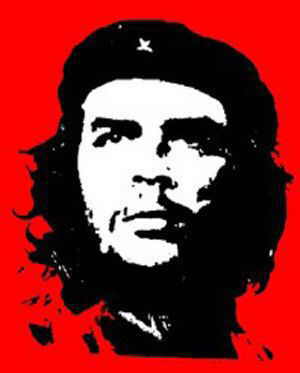
The army subsequently buried his body in a mass grave where it remained until it was repatriated to Cuba in 1997 with a hero’s welcome. Guevara kept a diary during the guerrilla campaign in Bolivia that was subsequently transcribed and published in various editions. Some critics condemned Guevara for mechanically applying his lessons from Cuba and theories of guerrilla warfare to the Bolivian situation where they did not fit so well, and thus ultimately leading to his failure and death. Elsewhere in Latin America, attempts by revolutionaries to apply his foco theory that a guerrilla force could create the objective conditions necessary for a guerrilla war similarly met with disaster. Others have criticized Guevara for overemphasizing the role of armed struggle in a revolutionary movement and have pointed out that although a relatively small guerrilla force overthrew Batista in Cuba, this came only after years of leftist political agitations and rising worker expectations. In death, Guevara looked like a sacrificed Christ, which helped create an image of Guevara as a martyr and prophet. A popular cult grew around “Saint Ernesto of La Higuera,” and locals placed his portrait in their houses alongside Catholic images. Since his death, Guevara’s supporters have celebrated October 8 as the Day of the Heroic Guerrilla. Protestors began to use a photograph of Guevara that Alberto Korda took in 1960, and this image subsequently became one of the most famous and recognized in the world. In death, Guevara became a more potent symbol than he had ever been in life.
Although a dedicated communist revolutionary, Guevara was highly critical of bureaucratic Soviet communism for having lost its revolutionary fervor. While as a Cuban government leader it complicated the relationship between the two countries, it also earned Guevara the respect and admiration of the New Left that was drawn to his open and voluntarist interpretation of Marxist theory. Following in the footsteps of earlier Latin American Marxist thinkers such as José Carlos Mariátegui, Guevara argued that subjective conditions, including the role of human consciousness, were more important for creating a revolutionary situation than an objective economic situation. Rather than waiting for a highly developed capitalist economy to collapse due to its internal contradictions, a dedicated cadre must engage in the political education of the masses. Despite his failure to spark an international socialist revolution, Guevara is admired for his creative adaptation of Marxist theory to his Latin American reality.
Decades after his death, Che Guevara continues to be championed as a revolutionary hero in a struggle for social justice and against oppression, exploitation, and marginalization. Although often reduced to a chic icon on T-shirts, his life represents a selfless dedication to the concerns of the underclass, a struggle to encourage people to place the needs of the broader society above their own narrow personal wishes and desires, and a willingness to make extensive personal sacrifices to chieve a more just and equable social order.
BEIRUT (AP) — Tens of thousands of Syrian government supporters poured into the streets Sunday to protest an Arab League vote to suspend the country's membership, as Turkey sent planes to evacuate diplomatic staff and their families after a night of attacks on embassies.
Pro-Syrian regime protesters, carry a giant Syrian flag during a demonstration against the Arab League decision to suspend Syria, in Damascus, Syria, on Sunday Nov. 13, 2011. Tens of thousands of pro-regime demonstrators gathered in a Damascus square Sunday to protest the Arab League's vote to suspend Syria over its bloody crackdown on the country's eight-month-old uprising. Saturday's Arab League decision was a sharp rebuke to a regime that prides itself as a bastion of Arab nationalism, but it was unlikely to immediately end a wave of violence that the U.N. estimates has killed more than 3,500 people since mid-March. (AP Photo/Muzaffar Salman)
Facing growing isolation, the Syrian government called for an urgent Arab summit to discuss the country's spiraling political unrest and invited Arab League officials to visit before its membership suspension was to take effect on Wednesday.
In a significant concession, the government said the Arab officials could bring any civilian or military observers they deem appropriate to oversee implementation of an Arab League plan for ending the bloodshed.
The 22-member bloc's vote on Saturday was a stinging rebuke to a regime that prides itself as a bastion of Arab nationalism and left Syria increasingly isolated over its crackdown on an eight-month uprising that the U.N. estimates has killed more than 3,500 people since mid-March.
The violence continued Sunday, with activists reporting at least 11 people killed in shootings by security forces in several parts of the country.
The Local Coordination Committees activist network said at least four of the deaths occurred in the central city of Hama when security forces fired on a group of opposition protesters who infiltrated a pro-government rally in the area.
Sunday's protests in support of the government drew large numbers in the capital and four other cities — a turnout helped by the closure of businesses and schools.
"You Arab leaders are the tails of Obama," read one banner held by protesters accusing the Arab League of bowing to pressure from the U.S. president.
Thousands of people carried red, black and white Syrian flags and posters of President Bashar Assad in a Damascus square. Similar demonstrations were held in the cities of Aleppo, Latakia, Tartous and Hasakeh.
The Syrian leader asserts that extremists pushing a foreign agenda to destabilize Syria are behind the country's unrest, rather than true reform seekers aiming to open the country's autocratic political system. Sunday's demonstrators accused Arab countries of being complicit with the purported conspiracy.
The government called the Arab League decision "illegal," claiming it was intended to set the stage for foreign military intervention like in Libya.
However, the offer to allow a visit by an Arab League ministerial committee and accompanying monitors appeared to signal some will to try to implement an Arab League-brokered deal for ending the violence that the government has so far seemed unwilling or unable to do. The Nov. 2 deal calls for Syria to halt attacks on protesters, pull tanks out of cities and hold talks with the opposition.
There was no immediate reaction from Arab League officials on the Syrian invitation. Arab League Secretary General Nabil Elaraby, on a visit to Libya, demanded immediate implementation of the Arab peace initiative.
Youssef Ahmed, Syria's ambassador to the Arab League, said the official request for an emergency meeting was on its way to the organization and that Syria was awaiting a response.
Iraq's representative with the Arab League has offered Baghdad as a location for the meeting if it is approved.
Members of the Syrian opposition rejoiced and saw the Arab vote to suspend Syria as a step toward greater recognition for their movement.
"This gives strong legitimacy to our cause. ... We consider this decision to be a victory for the Syrian revolution," Bassma Kodmani, a spokeswoman for the Syrian National Council opposition group, told The Associated Press.
Hours after the Arab League vote, pro-regime demonstrators in Syria assaulted the diplomatic offices of countries critical of the Syrian government, including break-ins at the Saudi and Qatari embassies and attacks at Turkish diplomatic posts across the country.
The overnight embassy attacks are likely to stoke anger in Arab states against the regime in Damascus. Arab disapproval in itself may not seriously damage President Assad's hold on power, but if Syria further antagonizes Gulf states, it risks having them build up the Syrian opposition into a unified body that can win international recognition, as happened during Libya's civil war this year.
Syrian security forces had confronted Saturday night's protesters at embassies with batons and tear gas but were unable to stop a group from breaking into the Qatari embassy and bringing down the Qatari flag and replacing it with the Syrian flag. Others entered Saudi Arabia's embassy compound, broke windows and ransacked some areas, the kingdom's media reported.
The kingdom strongly condemned the attack in a Foreign Ministry statement and said it held the Syrian authorities responsible for protecting its interests.
Saudi King Abdullah, who has condemned Assad's crackdown, had already recalled the Saudi ambassador to Syria in August. Kuwait and Bahrain have also recalled their ambassadors.
Protesters also tried to break into the Turkish Embassy in Damascus Saturday and into the country's consulates in the cities of Aleppo and Latakia, Turkey's state-run Anatolia news agency reported. Turkey is not a member of the Arab League but has also been sharply critical of Syria's crackdown, and Turkey's foreign minister welcomed the League vote.
Turkey on Sunday sent a plane to Damascus to evacuate the families of its diplomats as well as nonessential staff, Anatolia reported. The Turkish Foreign Ministry also said Turkey summoned Syria's charge d'affaires who was given a formal protest note demanding protection for its diplomatic missions.
France also said it had summoned Syria's ambassador to "remind" him of Syria's international obligations, after demonstrators tried to attack an honorary French consulate in Latakia and another French office in Aleppo.
On Sunday, hundreds of baton-carrying Syrian riot police in helmets ringed the U.S., Qatari, Saudi and Turkish embassies — all located in the capital's upscale Abu Rummaneh district. Three fire trucks were parked in front of the Turkish Embassy. The Turkish and Qatari embassies were closed for the day but the Saudi Embassy was operating, an operator said.
TEHRAN, Iran (AP) — An accidental explosion at a Revolutionary Guard ammunition depot west of Tehran killed at least 15 soldiers on Saturday, officials said.
In this image taken from amateur video smokes rises from an accidental explosion at a Revolutionary Guard ammunition depot outside Bidganeh village,west of Tehran which killed at least 15 people on Saturday Nov. 12, 2001, officials said. The explosions occurred when military personnel were transporting munitions at a base, said Guard spokesman Ramazan Sharif. The base is located outside Bidganeh village, 25 miles (40 kilometers) southwest of the capital. (AP Photo) TV OUT
The explosion occurred while military personnel were transporting munitions at a base, said Guard spokesman Gen. Ramazan Sharif. The base is located outside Bidganeh village, 25 miles (40 kilometers) southwest of the capital.
The Guard is Iran's most powerful military force.
"My colleagues at the Guard were transporting ammunition at one of the depots at the site when an explosion occurred as a result of an accident," Sharif said.
At least 15 Guard members were killed, state TV reported. The semi-official ISNA news agency said 10 people were injured and hospitalized. Sharif said some of them were in critical condition.
Lawmaker Parviz Soroori ruled out sabotage.
"No sabotage was involved in this incident. It has nothing to do with politics," Soroori was quoted as saying by the parliament's website, icana.ir.
Here is some Caption about Todays campaign in front of Teachers Students Center (TSC) at University of Dhaka. Captions are captured before the voting campaign starts. It was organized by Dhaka Metropolitan Police (DMP), ATN Bangla & Bangladesh Wonders Promotion Foundation and etc.
Banner
In front of the stage
In front of the Stage
Stage & Voting Place
Police officers are setting PC for voting campaign - 1
Police officers are setting PC for voting campaign - 2
Chinese police shot and injured two Tibetan protesters in southwestern China last Sunday, and a Tibetan nun burned herself to death the following day, a group advocating self-determination for Tibet said, the latest in months of protests.
The self-immolation and the protests signal that anger is swelling in Aba county, a mainly ethnic Tibetan part of Sichuan province that has been the centre of defiance against Chinese control.
Rights groups say the unrest could provoke Beijing to stage a renewed crackdown in Aba, which erupted in violence in March 2008 when Buddhist monks and other Tibetan people loyal to the exiled Dalai Lama, their traditional religious leader, confronted police and troops.
The condition and whereabouts of the two casualties, Dawa and Druklo, are unknown, the London-based Free Tibet group said.
Elsewhere in Sichuan, a 20-year-old nun, Tenzin Wangmo, set fire to herself on Monday afternoon outside a nunnery, three km (1.8 miles) from Aba county, the ninth self-immolation this year in the Tibetan parts of China, Free Tibet said.
She had called for religious freedom in Tibet and for the return of the Dalai Lama as she set herself alight, the group said.
Her death comes seven months after a Tibetan Buddhist monk, Phuntsog, 21, from the restive Kirti monastery, burned himself to death. That prompted a crackdown, with security forces detaining about 300 Tibetan monks for a month.
A Sichuan government propaganda official surnamed Yuan told Reuters that she knew "nothing about the two cases so far".
Free Tibet said that it was not known why security personnel opened fire on Dawa and Druklo, adding that one was shot in the leg and the other, in the torso. It did not specify who suffered what injury.
"Information from Tibet suggests there are more who are willing to give their lives, determined to draw global attention to the persistent and brutal violations Tibetans suffer under Chinese occupation," Free Tibet Director Stephanie Brigden said in a statement sent late on Monday.
"The acts of self-immolation are not taking place in isolation, protests have been reported in the surrounding region and calls for wider protests are growing."
Brigden said that the group has "grave concerns that greater force may be deployed if protests spread".
Nine ethnic Tibetans, eight of them from Aba prefecture, have burned themselves since March to protest against religious controls by the Chinese government, which labels the Dalai Lama a violent separatist, charges he strongly denies.
However, the protests have yet to spread to what China calls the Tibet Autonomous Region, which Beijing has controlled since Communist troops marched in 1950. It says its rule has bought much needed development to a poor and backward region.