Showing posts with label Tanzania. Show all posts

Saturday, December 17, 2011

CHE GUEVARA (Full Biography)

Ernesto Guevara de la Serna was born on June 14,1928, to a middle-class family in Rosario, Argentina. The Bolivian military executed him on October 9,1967, at the small town of La Higuera after a failedguerrilla attempt to overthrow that country’s government. Guevara was a socialist revolutionary and astrong internationalist who during the course of hisshort life traveled throughout much of the world. 
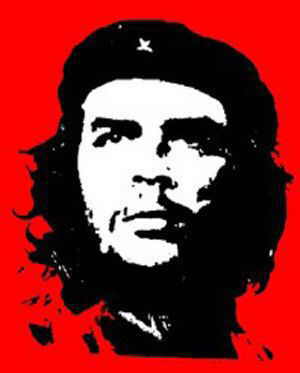
He is best known for being the number three commander in the Cuban Revolutionary Armed Forces that in 1959 overthrew the Fulgencio Batista dictatorship.From the Cuban guerrillas he gained the moniker “Che,” a Guaraní expression commonly used in Argentina that can be roughly translated as “hey you,”and he subsequently became best known by this name. Although his efforts to launch a continent-wide revolution to overthrow capitalism and to usher in a socialist utopia ultimately failed, Guevara became admired for his selfless dedication to a struggle against oppression and for social justice. The eldest of five children, Guevara came from a liberal-left family that embraced anti-clerical ideas and supported the Republicans in the Spanish Civil War. His mother, Celia de la Serna, had a particularly important influence on the formation of his social conscience. Throughout his life, Guevara suffered from severe asthma attacks, but nevertheless he pushed himself hard and excelled as an athlete. In 1948, he entered the University of Buenos Aires to study medicine. 
Although Guevara finished medical school in 1953, he was never seriously committed to the profession. In his early 20s, Guevara made three motorcycle trips that introduced him to the impoverished and oppressive conditions under which the majority of the Latin American people lived and worked. The first was a 4,000-mile moped trip in 1950 through northern Argentina. Alberto Granado, a friend and biochemist, joined Guevara on the second trip in 1951 and 1952 on a 500cc Norton motorcycle nicknamed “La Poderosa” (The Powerful One) that took them out of Argentina. The motorcycle did not make it further than Chile, but the two vagabonds continued on foot, hitchhiking, and on boat to Peru, Colombia, and Venezuela. Guevara continued on alone to Miami where he spent a miserable month flat broke before returning to his native Argentina.
undefined
Guevara kept a diary during his second trip that was published posthumously as The Motorcycle Diaries. Walter Salles made the diary into an awardwinning film in 2004 that subsequently revived Guevara as a media star. Although politically relatively insignificant in light of later events in Guevara’s life, it was a consciousness-raising experience that ultimately changed the direction his life would take.

The trip converted Guevara into a Pan-Latin-Americanist who, much like Simón Bolívar and José Martí, believed that the destiny of Latin America was unified and that national borders served to divide people in their struggles for a more just social order. After finishing his medical studies in 1953, Guevara began a third trip through Latin America, which proved to be much more important in maturing his revolutionary political ideology. In Bolivia, he observed the mobilization of workers and the implementation of agrarian reform following a popular 1952 revolution. In Guatemala, he lived through a 1954 U.S.-backed military coup that overthrew Jacobo Arbenz’s revolutionary government that had given land to peasants. Perhaps more than any other experience, this turned Guevara into a dedicated fighter against U.S. imperialism. It also convinced him that it was necessary to destroy completely the political and military forces of the old system, and to arm the masses to protect a revolution from counterrevolutionary forces. His recollections from this trip are recorded in his book, Back on the Road. After the Guatemalan coup, Guevara hid in the Argentina embassy before escaping to Mexico where he began a serious study of Marxism. A Peruvian exile named Hilda Gadea, whom he had initially met in Guatemala, had a particularly strong influence on the development of his ideology. 

The two married in 1955 and had a daughter they named Hilda. In Mexico, Guevara also met Fidel Castro, who was planning a revolution of his native Cuba. In 1956, Guevara joined Castro and 80 other guerrillas on the yacht Granma to launch an armed struggle againstthe Fulgencio Batista dictatorship. Castro had invited Guevara, the only non-Cuban in the group, to join as a medic. Shortly after landing in Cuba, the small guerrilla force ran into a military ambush that wiped out about half the group. Forced to choose between a firstaid kit and a box of bullets, Guevara took the ammunition, which symbolized his conversion from a medical doctor to a guerrilla fighter. Guevara fought with the Cubans for 2 years in the Sierra Maestra, eventually rising to the rank of Rebel Army commander. He became the number three leader after Fidel Castro and his brother Raúl. In the mountains, Guevara kept a diary that he later published as Reminiscences of the Cuban Revolutionary War. 

Building on these experiences, he wrote his most famous essay, Guerrilla Warfare, in which he used the Cuban revolution as a model to conduct other guerrilla wars to overthrow a dictatorship and implement a new and more just social order. In Guerrilla Warfare, which was part theory, part practical information, and part political tract designed to press the left into action, Guevara made three main points that formed the basis for what came to be known as his foco theory of guerrilla warfare. First, Guevara argued that the guerrilla victory in Cuba demonstrated that a small guerrilla army could overthrow a large, powerful, established regime. Second, popular movements did not have to wait for the proper economic conditions before organizing a revolutionary war; the insurrectionary guerrilla force can create them. Third, Guevara believed that in Latin America revolutionary struggles should be based in a rural, peasant population. After the January 1959 triumph of the revolution, Guevara became a Cuban citizen and legally adopted Che as part of his name. He assumed a series of positions in the new revolutionary government, including with the agrarian reform institution, head of the National Bank, and Minister of Industry—jobs for which he had no training or expertise. Guevara played a key role in shaping the country’s economic policy, advocating a centralized economy based on broad government ownership of industry. He advocated creating a “new socialist man” who would be motivated to support the revolution through moral rather than material incentives. Guevara could be a ruthless leader, demanding high levels of performance from those under him. However, he held himself to higher standards than anyone else and worked impossibly long hours. He rejected privilege and luxury, living an austere life and setting an example for others by devoting his weekends and evenings to voluntary labor, including cutting sugarcane to support the revolution. In Cuba, Guevara divorced Gadea and married Aleida March, whom he had met during the revolutionary war. Together, they had four children. The oldest, Aleida Guevara March, became a medical doctor like her father and also traveled internationally in support of revolutionary movements. Guevara was better suited to the life of a vagabond or guerrilla fighter, and soon became restless as a bureaucrat in the new revolutionary Cuban government. Increasingly, he traveled internationally as an ambassador for Cuba. Finally, in 1965 he renounced his governmental positions and Cuban citizenship, disappeared from public view, and left the island to continue the revolutionary struggle. In what had long been seen as his “lost year,” Guevara clandestinely traveled to Africa to fight in the Congo. 
undefined

As later recounted in his diary Che in Africa, it proved to be a frustrating experience. Guevara pointed to the local forces’ incompetence, intransigence, and infighting for their failure. As an outsider, he felt he lacked the authority to address these problems. After spending time in Tanzania, Czechoslovakia, and the German Democratic Republic, Guevara clandestinely returned to Cuba and to a region where he felt he had more legitimacy to lead a revolution. He became increasingly vocal in denouncing U.S. imperialism. In his last public statement, a message to the Organization of Solidarity with the Peoples of Asia, Africa, and Latin America (OSPAAAL, also known as the Tricontinental), he spoke of creating two, three, or many Vietnams to strike a deadly blow against imperialism. In 1966, Guevara traveled to Bolivia disguised as a middle-aged Uruguayan businessman to launch a new continental Latin American revolution. Despite the fact that Bolivia had a radical urban labor movement, he chose to position his guerrilla army in the isolated eastern jungle, which was geographically more appropriate to his military strategy. This turned out to be a costly mistake. Guevara struggled with the Bolivian Communist Party for control over the guerrilla movement, and failed to gain the support of the local peasantry who had received land from the government and felt little animosity toward the Bolivian army (which was often recruited from their own ranks). Without local support and facing internal divisions and a harsh inhospitable terrain, a disaster seemed to be inevitable. For several months, Guevara engaged in skirmishes with the Bolivian military but was always on the defensive. On October 8, 1967, a crack anti-guerrilla military unit trained by U.S. Army Special Forces captured Guevara and his few remaining guerrilla fighters near the small village of La Higuera. Fearing the potential publicity of a political show trial and possible release or escape, Bolivian dictator René Barrientos ordered his execution. On October 9, the Bolivian Special Forces shot him below the head to simulate battlefield wounds. To prove that Guevara was dead, they brought his boy to Vallegrande for public display and amputated his hands for fingerprint verification. 

The army subsequently buried his body in a mass grave where it remained until it was repatriated to Cuba in 1997 with a hero’s welcome. Guevara kept a diary during the guerrilla campaign in Bolivia that was subsequently transcribed and published in various editions. Some critics condemned Guevara for mechanically applying his lessons from Cuba and theories of guerrilla warfare to the Bolivian situation where they did not fit so well, and thus ultimately leading to his failure and death. Elsewhere in Latin America, attempts by revolutionaries to apply his foco theory that a guerrilla force could create the objective conditions necessary for a guerrilla war similarly met with disaster. Others have criticized Guevara for overemphasizing the role of armed struggle in a revolutionary movement and have pointed out that although a relatively small guerrilla force overthrew Batista in Cuba, this came only after years of leftist political agitations and rising worker expectations. In death, Guevara looked like a sacrificed Christ, which helped create an image of Guevara as a martyr and prophet. A popular cult grew around “Saint Ernesto of La Higuera,” and locals placed his portrait in their houses alongside Catholic images. Since his death, Guevara’s supporters have celebrated October 8 as the Day of the Heroic Guerrilla. Protestors began to use a photograph of Guevara that Alberto Korda took in 1960, and this image subsequently became one of the most famous and recognized in the world. In death, Guevara became a more potent symbol than he had ever been in life.

Although a dedicated communist revolutionary, Guevara was highly critical of bureaucratic Soviet communism for having lost its revolutionary fervor. While as a Cuban government leader it complicated the relationship between the two countries, it also earned Guevara the respect and admiration of the New Left that was drawn to his open and voluntarist interpretation of Marxist theory. Following in the footsteps of earlier Latin American Marxist thinkers such as José Carlos Mariátegui, Guevara argued that subjective conditions, including the role of human consciousness, were more important for creating a revolutionary situation than an objective economic situation. Rather than waiting for a highly developed capitalist economy to collapse due to its internal contradictions, a dedicated cadre must engage in the political education of the masses. Despite his failure to spark an international socialist revolution, Guevara is admired for his creative adaptation of Marxist theory to his Latin American reality.
Decades after his death, Che Guevara continues to be championed as a revolutionary hero in a struggle for social justice and against oppression, exploitation, and marginalization. Although often reduced to a chic icon on T-shirts, his life represents a selfless dedication to the concerns of the underclass, a struggle to encourage people to place the needs of the broader society above their own narrow personal wishes and desires, and a willingness to make extensive personal sacrifices to chieve a more just and equable social order.

Source: GUEVARA, CHE (1928–1967), by Marc Becker
Photo Source: Internet

Monday, November 30, 2009

Tanzania

Tanzania Population: 40,213,160


 Background
Shortly after achieving independence from Britain in the early 1960s, Tanganyika and Zanzibar merged to form the nation of Tanzania in 1964. One-party rule came to an end in 1995 with the first democratic elections held in the country since the 1970s. Zanzibar's semi-autonomous status and popular opposition have led to two contentious elections since 1995, which the ruling party won despite international observers' claims of voting irregularities.
Map data ©2009 Europa Technologies - Terms of Use

 Geography
Kilimanjaro is highest point in Africa; bordered by three of the largest lakes on the continent: Lake Victoria (the world's second-largest freshwater lake) in the north, Lake Tanganyika (the world's second deepest) in the west, and Lake Nyasa in the southwest.
Location:Eastern Africa, bordering the Indian Ocean, between Kenya and Mozambique
Geographic coordinates:6 00 S, 35 00 E
Area:total: 945,087 sq km
land: 886,037 sq km
water: 59,050 sq km
note: includes the islands of Mafia, Pemba, and Zanzibar
Size comparison: slightly larger than twice the size of California
Land Boundaries:total: 3,861 km
border countries: Burundi 451 km, Democratic Republic of the Congo 459 km, Kenya 769 km, Malawi 475 km, Mozambique 756 km, Rwanda 217 km, Uganda 396 km, Zambia 338 km
Coastline:1,424 km
Maritime claims:territorial sea: 12 nm
exclusive economic zone: 200 nm
Climate:varies from tropical along coast to temperate in highlands
Terrain:plains along coast; central plateau; highlands in north, south
Elevation extremes:lowest point: Indian Ocean 0 m
highest point: Kilimanjaro 5,895 m
Natural resources:hydropower, tin, phosphates, iron ore, coal, diamonds, gemstones, gold, natural gas, nickel
Land use:arable land: 4.23%
permanent crops: 1.16%
other: 94.61% (2005)
Irrigated land:1,840 sq km (2003)
Natural hazards:flooding on the central plateau during the rainy season; drought
Current Environment Issues:soil degradation; deforestation; desertification; destruction of coral reefs threatens marine habitats; recent droughts affected marginal agriculture; wildlife threatened by illegal hunting and trade, especially for ivory
International Environment Agreements:party to: Biodiversity, Climate Change, Climate Change-Kyoto Protocol, Desertification, Endangered Species, Hazardous Wastes, Law of the Sea, Ozone Layer Protection, Wetlands
signed, but not ratified: none of the selected agreements

 People
Population:40,213,160 note: estimates for this country explicitly take into account the effects of excess mortality due to AIDS; this can result in lower life expectancy, higher infant mortality, higher death rates, lower population growth rates, and changes in the distribution of population by age and sex than would otherwise be expected (July 2008 est.)
Age structure:0-14 years: 43.5% (male 8,763,471/female 8,719,198)
15-64 years: 53.7% (male 10,638,666/female 10,947,190)
65 years and over: 2.8% (male 502,368/female 642,269) (2008 est.)
Median age:total: 17.8 years
male: 17.6 years
female: 18.1 years (2008 est.)
Population growth rate:2.072% (2008 est.)
Birth rate:35.12 births/1,000 population (2008 est.)
Death rate:12.92 deaths/1,000 population (2008 est.)
Net migration rate:-1.48 migrant(s)/1,000 population (2008 est.)
Sex ratio:at birth: 1.03 male(s)/female
under 15 years: 1 male(s)/female
15-64 years: 0.97 male(s)/female
65 years and over: 0.78 male(s)/female
total population: 0.98 male(s)/female (2008 est.)
Infant mortality rate:total: 70.46 deaths/1,000 live births
male: 77.51 deaths/1,000 live births
female: 63.19 deaths/1,000 live births (2008 est.)
Life expectancy at birth:total population: 51.45 years
male: 50.06 years
female: 52.88 years (2008 est.)
Total fertility rate:4.62 children born/woman (2008 est.)
HIV/AIDS - adult prevalence rate:8.8% (2003 est.)
HIV/AIDS - people living with HIV/AIDS:1.6 million (2003 est.)
HIV/AIDS - deaths:160,000 (2003 est.)
Nationality:noun: Tanzanian(s)
adjective: Tanzanian
Ethnic groups:mainland - African 99% (of which 95% are Bantu consisting of more than 130 tribes), other 1% (consisting of Asian, European, and Arab); Zanzibar - Arab, African, mixed Arab and African
Religions:mainland - Christian 30%, Muslim 35%, indigenous beliefs 35%; Zanzibar - more than 99% Muslim
Languages:Kiswahili or Swahili (official), Kiunguja (name for Swahili in Zanzibar), English (official, primary language of commerce, administration, and higher education), Arabic (widely spoken in Zanzibar), many local languages note: Kiswahili (Swahili) is the mother tongue of the Bantu people living in Zanzibar and nearby coastal Tanzania; although Kiswahili is Bantu in structure and origin, its vocabulary draws on a variety of sources including Arabic and English; it has become the lingua franca of central and eastern Africa; the first language of most people is one of the local languages
Literacy:definition: age 15 and over can read and write Kiswahili (Swahili), English, or Arabic
total population: 69.4%
male: 77.5%
female: 62.2% (2002 census)

 Government
Country name:conventional long form: United Republic of Tanzania
conventional short form: Tanzania
local long form: Jamhuri ya Muungano wa Tanzania
local short form: Tanzania
former: United Republic of Tanganyika and Zanzibar
Government type:republic
Capital:name: Dar es Salaam
geographic coordinates: 6 48 S, 39 17 E
time difference: UTC+3 (8 hours ahead of Washington, DC during Standard Time)
note: legislative offices have been transferred to Dodoma, which is planned as the new national capital; the National Assembly now meets there on a regular basis
Administrative divisions:26 regions; Arusha, Dar es Salaam, Dodoma, Iringa, Kagera, Kigoma, Kilimanjaro, Lindi, Manyara, Mara, Mbeya, Morogoro, Mtwara, Mwanza, Pemba North, Pemba South, Pwani, Rukwa, Ruvuma, Shinyanga, Singida, Tabora, Tanga, Zanzibar Central/South, Zanzibar North, Zanzibar Urban/West
Independence:26 April 1964; Tanganyika became independent 9 December 1961 (from UK-administered UN trusteeship); Zanzibar became independent 19 December 1963 (from UK); Tanganyika united with Zanzibar 26 April 1964 to form the United Republic of Tanganyika and Zanzibar; renamed United Republic of Tanzania 29 October 1964
National holiday:Union Day (Tanganyika and Zanzibar), 26 April (1964)
Constitution:25 April 1977; major revisions October 1984
Legal system:based on English common law; judicial review of legislative acts limited to matters of interpretation; has not accepted compulsory ICJ jurisdiction
Suffrage:18 years of age; universal
Executive branch:chief of state: President Jakaya KIKWETE (since 21 December 2005); Vice President Dr. Ali Mohammed SHEIN (since 5 July 2001); note - the president is both chief of state and head of government
head of government: President Jakaya KIKWETE (since 21 December 2005); Vice President Dr. Ali Mohammed SHEIN (since 5 July 2001)
note: Zanzibar elects a president who is head of government for matters internal to Zanzibar; Amani Abeid KARUME was reelected to that office on 30 October 2005
cabinet: Cabinet appointed by the president from among the members of the National Assembly
elections: president and vice president elected on the same ballot by popular vote for five-year terms (eligible for a second term); election last held 14 December 2005 (next to be held in December 2010); prime minister appointed by the president
election results: Jakaya KIKWETE elected president; percent of vote - Jakaya KIKWETE 80.3%, Ibrahim LIPUMBA 11.7%, Freeman MBOWE 5.9%
Legislative branch:unicameral National Assembly or Bunge (274 seats; 232 members elected by popular vote, 37 allocated to women nominated by the president, 5 to members of the Zanzibar House of Representatives; to serve five-year terms); note - in addition to enacting laws that apply to the entire United Republic of Tanzania, the Assembly enacts laws that apply only to the mainland; Zanzibar has its own House of Representatives to make laws especially for Zanzibar (the Zanzibar House of Representatives has 50 seats elected by universal suffrage to serve five-year terms)
elections: last held 14 December 2005 (next to be held in December 2010)
election results: National Assembly - percent of vote by party - NA; seats by party - CCM 206, CUF 19, CHADEMA 5, other 2, women appointed by the president 37, Zanzibar representatives 5 Zanzibar House of Representatives - percent of vote by party - NA; seats by party - CCM 30, CUF 19; 1 seat was nullified with a rerun to take place soon
Judicial branch:Permanent Commission of Enquiry (official ombudsman); Court of Appeal (consists of a chief justice and four judges); High Court (consists of a Jaji Kiongozi and 29 judges appointed by the president; holds regular sessions in all regions); District Courts; Primary Courts (limited jurisdiction and appeals can be made to the higher courts)
Political parties and leaders:Chama Cha Demokrasia na Maendeleo (Party of Democracy and Development) or CHADEMA [Bob MAKANI]; Chama Cha Mapinduzi or CCM (Revolutionary Party) [Jakaya Mrisho KIKWETE]; Civic United Front or CUF [Ibrahim LIPUMBA]; Democratic Party [Christopher MTIKLA] (unregistered); Tanzania Labor Party or TLP [Augustine Lyatonga MREME]; United Democratic Party or UDP [John CHEYO]
Political pressure groups and leaders:Economic and Social Research Foundation or ESRF; Free Zanzibar; Tanzania Media Women's Association or TAMWA
International organization participation:ACP, AfDB, AU, C, EAC, EADB, FAO, G-6, G-77, IAEA, IBRD, ICAO, ICC, ICCt, ICRM, IDA, IFAD, IFC, IFRCS, ILO, IMF, IMO, IMSO, Interpol, IOC, IOM, IPU, ISO, ITSO, ITU, ITUC, MIGA, NAM, OPCW, SADC, UN, UNAMID, UNCTAD, UNESCO, UNHCR, UNIDO, UNIFIL, UNMIS, UNOCI, UNWTO, UPU, WCO, WFTU, WHO, WIPO, WMO, WTO
Diplomatic representation in the US:chief of mission: Ambassador Ombeni Yohana SEFUE
chancery: 2139 R Street NW, Washington, DC 20008
telephone: [1] (202) 939-6125
FAX: [1] (202) 797-7408
Diplomatic representation from the US:chief of mission: Ambassador Mark GREEN
embassy: 686 Old Bagamoyo Road, Msasani, Dar es Salaam
mailing address: P. O. Box 9123, Dar es Salaam
telephone: [255] (22) 266-8001
FAX: [255] (22) 266-8238, 266-8373

 Economy
Tanzania is in the bottom ten percent of the world's economies in terms of per capita income. The economy depends heavily on agriculture, which accounts for more than 40% of GDP, provides 85% of exports, and employs 80% of the work force. Topography and climatic conditions, however, limit cultivated crops to only 4% of the land area. Industry traditionally featured the processing of agricultural products and light consumer goods. The World Bank, the IMF, and bilateral donors have provided funds to rehabilitate Tanzania's out-of-date economic infrastructure and to alleviate poverty. Long-term growth through 2005 featured a pickup in industrial production and a substantial increase in output of minerals led by gold. Recent banking reforms have helped increase private-sector growth and investment. Continued donor assistance and solid macroeconomic policies supported real GDP growth of 7.1% in 2008.
GDP (purchasing power parity):$56.22 billion (2008 est.)
GDP (official exchange rate):$20.63 billion (2008 est.)
GDP - real growth rate:7.1% (2008 est.)
GDP - per capita (PPP):$1,400 (2008 est.)
GDP - composition by sector:agriculture: 27%
industry: 22.7%
services: 50.3% (2008 est.)
Labor force:20.38 million (2008 est.)
Labor force - by occupation:agriculture: 80%
industry and services: 20% (2002 est.)
Unemployment rate:NA%
Population below poverty line:36% (2002 est.)
Household income or consumption by percentage share:lowest 10%: 2.9%
highest 10%: 26.9% (2000)
Distribution of family income - Gini index:34.6 (2000)
Inflation rate (consumer prices):9.3% (2008 est.)
Investment (gross fixed):24.2% of GDP (2008 est.)
Budget:revenues: $4.216 billion
expenditures: $4.658 billion (2008 est.)
Public debt:22% of GDP (2008 est.)
Agriculture - products:
Industries:agricultural processing (sugar, beer, cigarettes, sisal twine); diamond, gold, and iron mining, salt, soda ash; cement, oil refining, shoes, apparel, wood products, fertilizer
Industrial production growth rate:
Electricity - production:2.682 billion kWh (2006 est.)
Electricity - consumption:2.225 billion kWh (2006 est.)
Electricity - exports:0 kWh (2007 est.)
Electricity - imports:123 million kWh (2006 est.)
Oil - production:0 bbl/day (2007 est.)
Oil - consumption:27,270 bbl/day (2006 est.)
Oil - exports:0 bbl/day (2005)
Oil - imports:26,760 bbl/day (2005)
Oil - proved reserves:0 bbl (1 January 2006 est.)
Natural gas - production:146 million cu m (2006 est.)
Natural gas - consumption:146 million cu m (2006 est.)
Natural gas - exports:0 cu m (2007 est.)
Natural gas - imports:0 cu m (2007 est.)
Natural gas - proved reserves:6.513 billion cu m (1 January 2008 est.)
Current account balance:-$2.275 billion (2008 est.)
Exports:$2.49 billion f.o.b. (2008 est.)
Exports - commodities:gold, coffee, cashew nuts, manufactures, cotton
Exports - partners:China 10.3%, India 9.7%, Netherlands 6.5%, Germany 6.3%, UAE 4.9% (2007)
Imports:$5.901 billion f.o.b. (2008 est.)
Imports - commodities:consumer goods, machinery and transportation equipment, industrial raw materials, crude oil
Imports - partners:China 12%, Kenya 8%, South Africa 7.7%, India 6.9%, UAE 5.9% (2007)
Reserves of foreign exchange and gold:$2.624 billion (31 December 2008 est.)
Debt - external:$5.311 billion (31 December 2008 est.)
Stock of direct foreign investment - at home:$NA
Stock of direct foreign investment - abroad:$NA
Market value of publicly traded shares:$587.9 million (2005)
Currency (code):Tanzanian shilling (TZS)
Exchange rates:Tanzanian shillings (TZS) per US dollar - 1,178.1 (2008 est.), 1,255 (2007), 1,251.9 (2006), 1,128.93 (2005), 1,089.33 (2004)
Fiscal year:1 July - 30 June

 Communications
Telephones in use:165,013 (2008)
Cellular Phones in use:9.358 million (2008)
Telephone system:general assessment: telecommunications services are inadequate; system operating below capacity and being modernized for better service; small aperture terminal (VSAT) system under construction
domestic: fixed-line telephone network inadequate with less than 1 connection per 100 persons; mobile-cellular service, aided by multiple providers, is increasing; trunk service provided by open-wire, microwave radio relay, tropospheric scatter, and fiber-optic cable; some links being made digital
international: country code - 255; satellite earth stations - 2 Intelsat (1 Indian Ocean, 1 Atlantic Ocean)
Radio broadcast stations:AM 12, FM 11, shortwave 2 (1998)
Television broadcast stations:3 (1999)
Internet country code:.tz
Internet hosts:24,271 (2008)
Internet users:400,000 (2007)

 Transportation
Airports:124 (2007)
Airports (paved runways):total: 10
over 3,047 m: 2
2,438 to 3,047 m: 2
1,524 to 2,437 m: 5
914 to 1,523 m: 1 (2007)
Airports (unpaved runways):total: 114
1,524 to 2,437 m: 17
914 to 1,523 m: 63
under 914 m: 34 (2007)
Pipelines:gas 287 km; oil 891 km (2007)
Railways:total: 3,690 km
narrow gauge: 969 km 1.067-m gauge; 2,721 km 1.000-m gauge (2006)
Roadways:total: 78,891 km
paved: 6,808 km
unpaved: 72,083 km (2003)
Waterways:Lake Tanganyika, Lake Victoria, and Lake Nyasa principal avenues of commerce with neighboring countries; rivers not navigable (2007)
Merchant marine:total: 9
by type: cargo 1, passenger/cargo 4, petroleum tanker 4
registered in other countries: 1 (Honduras 1) (2008)
Ports and terminals:Dar es Salaam

 Military

Military branches:Tanzanian People's Defense Force (Jeshi la Wananchi la Tanzania, JWTZ): Army, Naval Wing (includes Coast Guard), Air Defense Command (includes Air Wing), National Service (2007)
Military service age and obligation:18 years of age for voluntary military service (2007)
Manpower available for military service:males age 16-49: 9,108,177 (2008 est.)
Manpower fit for military service:males age 16-49: 5,278,833 (2008 est.)