Showing posts with label Facebook Privacy. Show all posts

Thursday, February 2, 2012

Facebook surrenders its privacy in IPO documents

The unveiling came late Wednesday when the company that depends on people to share their lives online filed its plans to raise $5 billion in an initial public offering of stock. It's a revelatory moment that prospective investors, curious competitors and nosy reporters have been awaiting for two years. During that time, Facebook established itself as a communications hub and emerged as a threat to the Internet's most powerful company, Google Inc.

This Dec. 13, 2011 file photo, shows of worker inside Facebook headquarters in Menlo Park, Calif. Facebook, the social network that changed "friend" from a noun to a verb, is expected to file as early as Wednesday to sell stock on the open market. Its debut is likely to be the most talked-about initial public offering since Google in 2004. (AP Photo/Paul Sakuma, file)
As with almost anything crafted by a bunch of lawyers and bankers, the 197-page prospectus that Facebook filed with the Securities and Exchange Commission is filled with boilerplate legalese and mind-numbing numbers.

But there were some juicy details in there, too.

Above all, the documents confirmed what everyone had been hearing: Facebook is very profitable and getting stronger. The company Mark Zuckerberg started with some friends in 2004 has seen its annual revenue soar from $777 million in 2009 to $3.7 billion last year. Facebook's earnings have grown at a similar rate too, ballooning from $122 million in 2009 to $668 million last year.

Facebook ended 2011 with $3.9 billion in cash. That's a relatively small amount compared to the nearly $45 billion that Google has in the bank.

Facebook's prosperity has been fueled by a steady expansion of its audience, making its website a more attractive marketing vehicle for ads, which account for most of the company's revenue. Facebook ended last year with 845 million users, up 39 percent from 608 million at the end of 2010. Those users share their interests and preferences prodigiously. Facebook recorded a daily average of 2.7 billion "likes" and comments during the final three months of last year.

Facebook has become so addictive that more than half its audience — 483 million users — log in every day.
Facebook's revenue total disappointed some people who pored through the documents. One reason: The company generates about $4.39 in revenue per user. "That is a surprisingly low number," said University of Notre Dame finance professor Tim Loughran, who studies IPOs. Google's annual revenue of nearly $38 billion works out to more than $30 per user of its services.

"Facebook needs to find more ways to get revenue from their users," Loughran said.

Facebook listed its most promising expansion opportunities as Brazil, Germany, India, Japan, Russia and South Korea. The company, based in Menlo Park, Calif., eventually hopes to make its service available in China if it can navigate rules requiring online content to be censored if the Chinese government considers it to be objectionable or obscene.

The IPO filing gives some clue when Facebook is likely to surpass 1 billion users. If it can add users at roughly the same pace as last year, Facebook should surpass the 1 billion mark this summer.

As it is, Facebook already generates 44 percent of its revenue outside the U.S. The company is also developing other sources of revenue beyond online advertising faster than Google. Advertising accounted for 85 percent of Facebook's revenue last year. It made up 96 percent of Google's. Facebook's other revenue sources include the 30 percent cut of sales it takes from game makers and other external applications companies that sell things on its website.

The big question is whether Facebook's numbers are impressive enough to fetch the lofty IPO price. It's still too early in the process for Facebook to reveal how much it intends to ask for its shares, but Wednesday's filing provides some clues. Facebook valued its Class B common stock at $29.73 at the end of December, down slightly from appraisals of $30.07 in June and September. If this unfolds like most hot IPOs, Facebook will probably try to sell its shares at a premium. That could mean an IPO price in the $35 to $40 range. Investor demand, though, ultimately will dictate the pricing.

Facebook still hasn't listed how many outstanding shares it has, but the documents make it possible to make a rough estimate of the company's market value at the end of last year. Financial notes in the filing show Facebook calculated it had about 2.9 billion fully diluted shares at the end of December. That works out to a market value of about $86 billion, based on Facebook's $29.73-per-share self-appraisal.

At that price, the nearly 534 million shares that the 27-year-old Zuckerberg owns are worth about $16 billion. The filing indicates Zuckerberg will sell an unspecified number of shares in the IPO to cover a tax bill for exercising a stock option to buy 120 million shares. Zuckerberg has been collecting a $500,000 salary but that will fall to one dollar next year at his own request, according to the filing.

Other big winners in the IPO include: Facebook co-founder and old Zuckerberg friend, Dustin Moskovitz, who owns nearly 134 million shares; venture capital firm Accel Partners, which owns 201 million shares; Russian investor DST Global Ltd., which owns 131 million shares; and former PayPal CEO Peter Thiel, who owns nearly 45 million shares.

Hundreds of other Facebook employees could become millionaires because they receive stock as part of their compensation. Facebook has about 3,200 employees now, nearly 2,000 more than it did two years ago.

Facebook also shared some of its biggest worries in the filing. Among other things, it cited Google's ability to use its dominance in Internet search to promote its Google Plus social network. Facebook also frets the possibility that regulators in Europe and the U.S. may impose tougher privacy rules that would make it more difficult for the company to stockpile information about its users.

Source: The Associated Press
Wednesday, December 29, 2010

The 10 biggest tech 'fails' of 2010

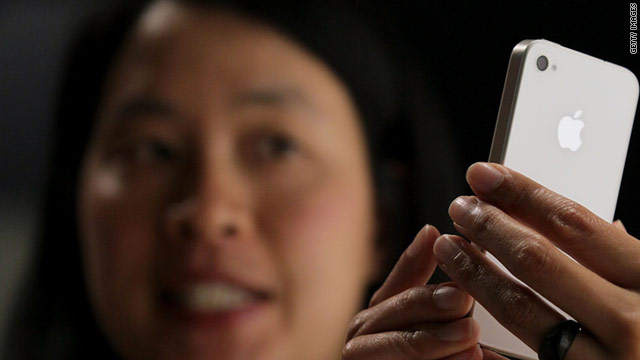
We're not sure if this qualifies as a "death grip," but the reception glitch was a "fail" before the iPhone 4's success.
(CNN) -- In 2010, we saw social networking skyrocket in popularity. We embraced a new category of tablet computer. And we rushed to new gaming systems that let us play video games without a controller.
But in the technology world, not all valleys are made of silicon. While the highs were high for the tech winners this year, the low points were equally low.
Even tech titans such as Apple and Google had some rough moments in 2010. And some ambitious ideas that must have made sense behind closed doors just didn't translate well to the real world.
So here are our top "tech fails" of the year: the missteps, misdeeds and mistakes that remind us that no one -- not even Steve Jobs -- is perfect. What did we miss? Let us know in the comments below.
1. iPhone 4 'Antennagate'
Apple drama -- nothing brings out the diehard fans and Cupertino haters quite like this one.
The newest iteration of the wildly popular smartphone was released in June.
By all standards, it's been a huge success. All standards except one.
Some people couldn't actually use it for phone calls.

Apple iPhone fix: Duct tape


OK, maybe that's an overstatement. But the Grip of Death (caused when users covered part of the antenna in a band around the phone's edge) was real -- and a big glitch in the device's rollout.
First Apple said the problem didn't exist. Then they said it was a software issue. Then they kind-of admitted it existed and gave away free cases to help. Then, they said it doesn't really exist anymore and stopped giving away the bumpers.
Months later, the problem is all but forgotten and the phones show no sign of dipping in popularity. So "fail," in this case, is a pretty relative term.

2. 3-D TV
After being all the buzz at the trend-making Consumer Electronics Show Video in January, 3-D television didn't do much of anything this year.
Three-dimension movies may have taken over your neighborhood multiplex. But how many people do you know who will pay $4,000 or more for a TV that has a limited amount of special content and makes you wear special glasses in the comfort of your own home?
That will likely change as prices fall and the technology gets better. But so far, in a market full of folks who just recently shelled out four figures for high-definition TVs, 3-D television has fallen flat.

3. Microsoft Kin
We almost don't have the heart to beat up on the Kins anymore.
Having already served up the short-lived, tween-centric phones in our Thanksgiving all-time tech turkey list, we'll just remind you that the Kin One and Kin Two (Born: April 2010. Died: July 2010) aimed to be the fun, social smartphone for kids but ended up as a sort-of iPhone Lite, with a pricier data plan than their limited functions could justify.
Microsoft seemed happy to move on to the Windows Phone 7 system, so we will, too.
R.I.P. Kin. We hardly knew ye.

4. Nexus One
Speaking of phones that failed ...
Nexus One vs. iPhone

Google's Android phone operating system came into its own in 2010, actually outselling phones running Apple's system by the end of the year.
But Google's effort at making their own phone to run it, the Nexus One, fizzled fast.
And here's the thing -- just about everyone who tried out the Nexus One liked it. It had features to rival the iPhone's, and reviewers were kind.
But Google might have gone wrong by originally selling the phone only online. Apparently, folks like to get their hands on their gadgets before paying for them.

5. Facebook privacy
Nothing on the internet elicits as much squawking as a change to Facebook.
Any change will do, really.
But this spring, some of the roughly half-billion users on the site got really miffed when a handful of privacy bugs, among other things, made private chat conversations briefly visible to Facebook friends.
Facebook privacy claims: True or false?
And on April 21, Facebook CEO Mark Zuckerberg announced a new Facebook feature called the "Open Graph," which essentially brings Facebook-like functionality to a number of websites.
A few folks actually left on a protester-created "Quit Facebook Day." Most didn't, but the sustained anger led Facebook to eventually simplify its privacy controls and roll out some new ones.

6. Google Buzz
Buzz was supposed to be Google's entry into the world of social networking in much the same way that Google Wave, which Google killed in August, was supposed to revolutionize real-time communication.
But it didn't help that, right out of the gate, Buzz's default settings amounted to a privacy breach. Basically, if users didn't tweak things at set-up, the people they e-mailed and chatted with the most through Gmail automatically became their followers.
So, theoretically, someone only needed to take a quick look at your profile to see who you interacted with the most in forums that most people assume are private.
Google quickly patched the problem. But the tool never really caught on. In Google Land, that might be OK, though -- the latest speculation is that Buzz might have been just the first step toward a networking site called "Google Me."

7. Gawker media sites hacked
Two fails here, really.
Fail No. 1: Gawker Media sites were breached in early December, with hackers saying they got access to the user names and passwords for about 1.3 million users of sites such as Gizmodo, Jezebel, Lifehacker and Kotaku.
Fail No. 2: A published list of the most-popular passwords hacked showed that "123456," "password," "12345" and "qwerty" were at or near the top of the list.
Sorry, folks. If those are your passwords, it's awfully tough to feel sorry for you getting hacked.

8. Content farms
Creating click-bait junk on the internet didn't start in 2010. But it certainly took off in a big way.
Demand Media, Aol's Seed and Associated Content, bought this year by Yahoo!, operate on a similar "content farm" model: They choose topics people are searching for on the internet, pay a "journalist" a tiny amount to write something -- anything -- about it, then slap it on the Web so people will click on it.
According to a Wired article, industry "leader" Demand Media already was cranking out 4,000 videos a day in late 2009. And they were on pace to publish 1 million items a month by this summer.
The magazine interviewed a videographer who has done 40,000 videos for Demand. Asked about his favorite, he said he couldn't really remember any of them.
Writing to what readers are interested in is one thing. At CNN, we monitor Twitter, Google Trends and other digital listening posts to make sure we're covering what people want to know about in the tech world.
But cranking out by-the-numbers copy, with profit as the only motive, just junks up the Web for everyone. It cynically betrays the promise of what the internet could, and should, be.
And maybe it won't work. The Wall Street Journal has said Demand has never made a profit. And just this week, there were reports that Demand is delaying a public stock offering because of concerns about its accounting practices.

9. Digg relaunch
It's impressive that content-sharing sites such as Digg have clung to some degree of relevancy in an era when most people share their favorite digital content on Facebook and Twitter.
But, to be sure, they've struggled. And a revolt by some vocal members of Digg this summer didn't help. The site got a major overhaul to make it easier for users to find content.
But the changes were buggy at first, and some old-school features such as the "Bury" button (which was eventually returned) had regulars claiming they were bolting for Digg competitor Reddit.
The fallout was still clearing by year's end, and the reasoning behind Digg's changes -- to help curate content in a more manageable way -- made sense. But the change brought some headaches that Digg's top brass no doubt would have liked to avoid.

10. iTunes Ping
There's a whole social network set up in Apple's iTunes store now.
Didn't know that? Well, there you go.
Not all musical artists are on there. And it doesn't integrate with Facebook. (Although Ping and Twitter just linked up). And, a lot of the time, it simply pushes you to buy music.
Needless to say, Ping hasn't really caught on.


Source: CNN